



AI Filmmaking in the UAE: The $1 Million Bet on the Future of Cinema
Imagine a film where the script, animation, and editing are all crafted by artificial intelligence. This is no longer science fiction—it’s the new reality in the UAE’s burgeoning film scene. As AI rapidly evolves from a simple assistant to a creative partner, a pivotal question emerges: Would you watch a film made by AI? The UAE is investing a million dollars to find out.
The $1 Million AI Film Award: A Game-Changer in Dubai
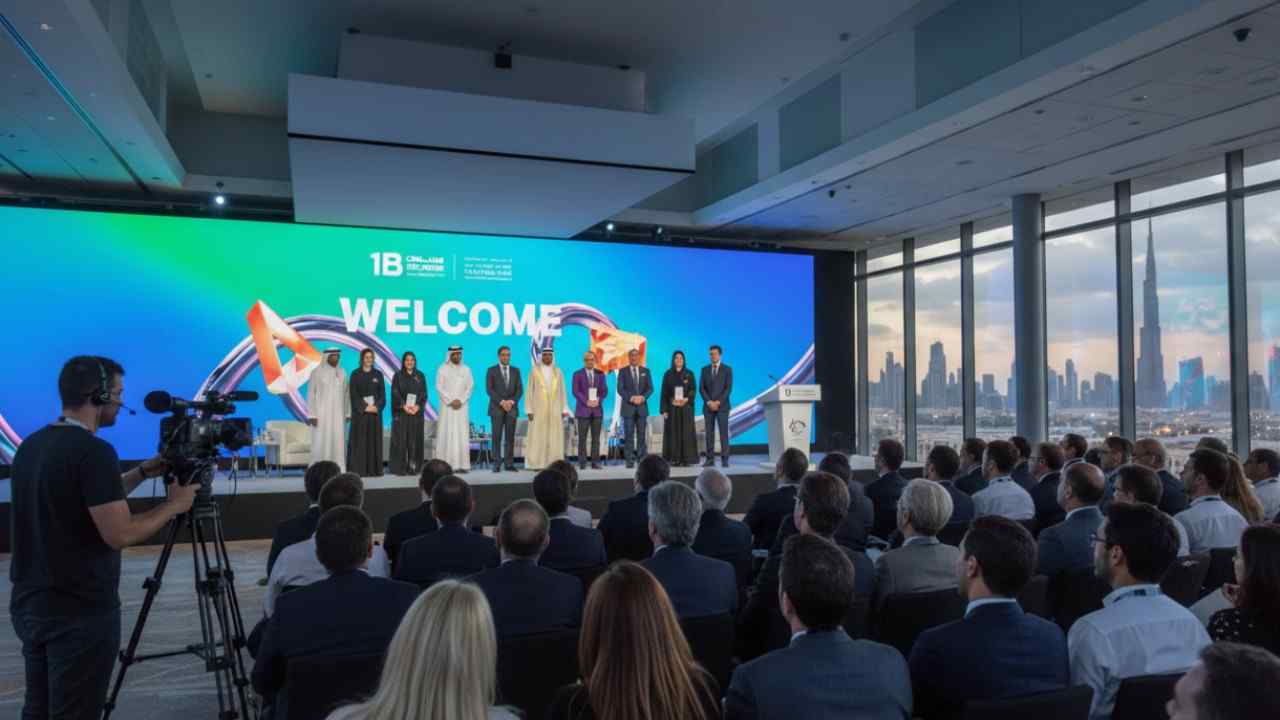
At the forefront of this revolution is the groundbreaking $1 Million AI Film Award, launched as part of the upcoming 1 Billion Followers Summit in Dubai. This contest isn’t just dipping a toe in the water; it’s a full-scale dive into the potential of AI. The rules mandate that at least 70% of each submitted film must be generated using Google’s AI tools, including Gemini, Veo, Imagen, and Flow. This bold initiative signals a definitive industry shift, positioning AI as a serious creative force in filmmaking.
Amplifying, Not Replacing, Human Creativity
A common fear is that AI will replace human artists. However, industry leaders like Najeeb Jarrar, Google’s Middle East & Africa Regional Director of Product and Marketing, see it differently. He frames AI as the next evolutionary step in creative tools, much like Photoshop for designers or AutoCAD for architects. The goal is to expand human creativity, not supplant it.
In practice, this means filmmakers are far from hands-off. They spend hours meticulously crafting prompts, refining AI-generated visuals, and fixing narrative inconsistencies. AI handles labor-intensive tasks like generating concept art, synthesizing voiceovers, or producing rough cuts. But the crucial creative decisions—the mood, the emotional core, the story arc—remain firmly in the director’s hands. As one filmmaker aptly stated, “You are still the director. AI doesn’t replace creativity, it amplifies it.“
Audience Reception and Filmmaker Perspectives
Independent creators in the UAE are already testing audience limits. Ali Muftah, an AI filmmaker, notes growing public openness to unconventional content, such as videos where generative AI allows babies to “speak” about their experiences. While traditionalists may prize purely human-made cinema, there’s a sense that AI-driven stories won’t be rejected outright but accepted as a new tool in the ancient art of storytelling.
This transition often begins with skepticism. Karim Al Saadi, a veteran Dubai-based producer, initially worried AI would strip away the human collaboration essential to creative magic. However, after using AI for concept art and pre-visualization, he became a convert. The technology saved him weeks in pre-production, allowing him to visualize scenes and test ideas with unprecedented speed and flexibility.
The Environmental Impact: A Double-Edged Sword
The rise of AI filmmaking is not without its critiques, particularly regarding its environmental footprint. Training and running powerful AI models consume massive computing power, leading to significant carbon emissions—some estimates equate the output to that of several cars over their lifetimes.
Conversely, AI offers a potential path to greener production. By reducing the need for physical location shoots, extensive travel, and the construction of large sets, AI could significantly lower the carbon emissions and material waste associated with traditional filmmaking. The key will be using these powerful tools responsibly to achieve a net positive environmental effect.
The Unchanging Element: The Power of Story
Despite the technological upheaval, filmmakers agree on one constant: the heart of cinema is immutable. Whether a story is told with human actors, traditional animation, or generative AI, what resonates with audiences are universal emotions, compelling characters, and powerful narratives.
As AI filmmaking becomes more accessible, we will see these creations proliferate on platforms like YouTube and TikTok, and eventually, in film festivals and cinemas. The ultimate test lies in how traditional audiences and critics respond. Will AI films gain legitimacy as a new art form, or remain niche curiosities? One thing is certain: the definition of “film” is being reshaped for the 21st century, and the UAE is positioned at the epicenter of this exciting transformation.

