



Trump Orders U.S. Agencies to Release Government Files on UFOs and Extraterrestrial Life Amid Heightened Public Interest
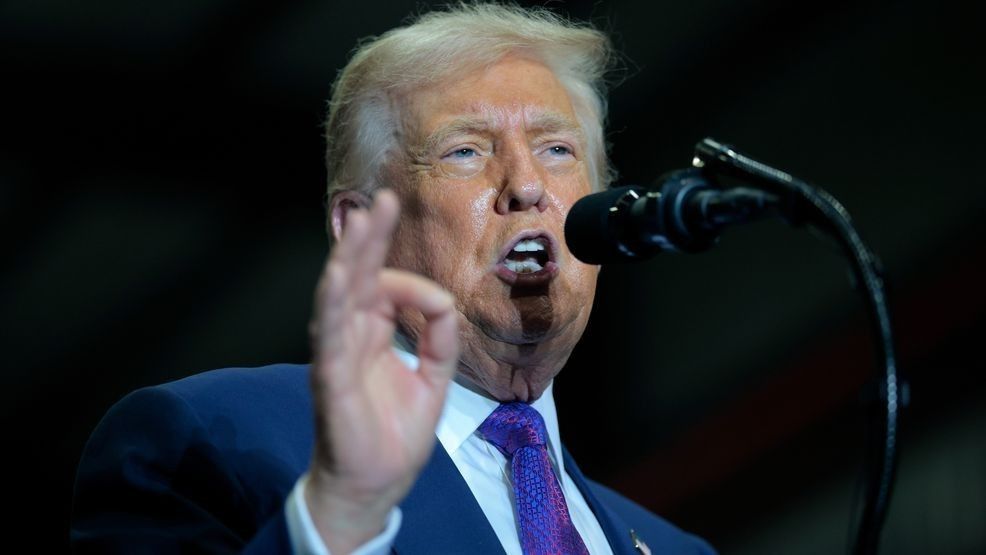
Washington D.C. — In a move that has captured global attention, U.S. President Donald Trump announced that he will direct the Pentagon and other federal agencies to begin identifying and releasing government files related to unidentified flying objects (UFOs), unidentified aerial phenomena (UAP) and extraterrestrial life. Trump said the decision was prompted by “tremendous public interest” in the subject and the debate surrounding what the government knows — or doesn’t know — about phenomena beyond Earth that has captivated imaginations for decades.
Trump made the announcement late on Thursday, February 19, 2026, in a post on his social media platform, Truth Social, where he declared a major shift in government transparency policy on one of the most enduring mysteries of the modern era.
“Based on the tremendous interest shown, I will be directing the Secretary of War and other relevant Departments and Agencies to begin the process of identifying and releasing Government files related to alien and extraterrestrial life, UAP, and UFOs, and any and all other information connected to these highly complex, but extremely interesting and important, matters,” Trump wrote.
The directive represents a significant escalation in the U.S. government’s approach to transparency on a topic that has long fascinated the public, conspiracy theorists, scientists and military personnel who have reported unexplained encounters during their service. Trump did not immediately clarify how extensive the release would be, what timeline the process would follow, or whether classified documents would actually be made public after previous disclosure efforts have often resulted in redacted or inconclusive materials.
Context: Why Now?
Trump’s decision follows a wave of renewed attention on UFOs and alien life sparked in part by remarks from former President Barack Obama during a podcast interview earlier this month. Obama said that he believes extraterrestrial life may exist — “the universe is so vast that the odds are good there’s life out there” — but clarified that during his presidency he had seen no evidence of alien contact or secret facilities such as Area 51 housing extraterrestrial beings, despite popular conspiracy theories suggesting otherwise.
Obama’s measured comments, carefully calibrated to acknowledge scientific probability without endorsing speculation, nevertheless reignited public conversation about what government officials might know but not share. His willingness to discuss the topic openly signaled that the stigma around UFO discussions had diminished significantly since his time in office.
Trump seized on Obama’s comments, accusing him — without providing evidence — of disclosing classified information and suggesting that his own move to release documents could address or rectify that supposed breach. Trump’s remark that Obama “gave classified information” garnered attention, though Obama later reiterated through representatives that his comments were speculative and not based on privileged data, reflecting the careful line former presidents must walk when discussing national security matters.
Public Interest and Government Efforts
Interest in UFOs and UAP surged in recent years after the release of several unexplained military videos and subsequent congressional hearings that brought the topic into mainstream discourse. In 2017, leaked footage from Navy pilots showing unidentified objects — including the now-famous “Tic Tac” encounter off the coast of California — reignited debate over whether governments are withholding evidence of non-earthly phenomena. The videos, authenticated by the Pentagon, showed objects performing maneuvers beyond known human technology.
That momentum led to the creation of the All-Domain Anomaly Resolution Office (AARO) within the U.S. government in 2022 to assess and catalogue sightings reported by military and intelligence personnel, centralizing efforts that had previously been scattered across multiple agencies. The office has since produced reports to Congress and the public, attempting to bring scientific rigor to a field often dominated by speculation.
Despite hundreds of reports filed and analyzed, officials — including the Pentagon and NASA — have stated there is no confirmed evidence of extraterrestrial visits or technology, with most investigations concluding that sightings appear to have mundane explanations, such as drones, atmospheric effects, sensor malfunctions or misidentified aircraft. The AARO’s reports have consistently emphasized that while many cases remain unexplained, explanation does not equal extraterrestrial origin.
Still, polls show that a significant portion of the U.S. public believes extraterrestrial life is real and that the government is hiding evidence. A YouGov survey in recent years found that more than half of Americans think life exists elsewhere in the universe, and a substantial minority believe that UFO sightings represent alien craft, fueling broader curiosity about what, if anything, the government might be concealing behind classification walls.
Reactions from Lawmakers and Public Figures
Trump’s announcement drew a range of reactions from across the political spectrum, reflecting the topic’s unique ability to transcend traditional partisan divisions. Some Republican lawmakers, including members of congressional oversight committees, have welcomed the plan and signalled an interest in conducting hearings or legislative oversight on the matter, seeing transparency as a good government principle.
Rep. Anna Paulina Luna and Rep. Tim Burchett, for instance, have emphasized the need for transparency on UAP information, arguing that declassification could address public curiosity and national security concerns simultaneously. Both have been vocal advocates for greater disclosure and have criticized what they view as excessive government secrecy.
Critics, however, have questioned Trump’s motivations, suggesting that the push for UFO file releases could be a political distraction from other pressing issues or controversies facing his administration. Some commentators note that past attempts to stir interest in “UFO disclosure” have become entangled with misinformation or unverified claims, making the interpretation of any released material potentially complex and subject to manipulation by various interest groups.
Scientists and researchers have responded with cautious interest, noting that while transparency is generally positive, the release of documents without proper context could lead to misunderstanding and further conspiracy theories rather than genuine public understanding.
What Might Be Released?
Details remain sparse on exactly what files might be disclosed, leaving enthusiasts and skeptics alike speculating about what could emerge. Government agencies — including Defense, NASA, and intelligence services — maintain archives of reports, evaluations and internal communications about UAP encounters and related research spanning decades. These records range from internal memos and sighting reports to scientific analyses conducted by researchers, some of which remain classified for national security reasons unrelated to extraterrestrial questions.
Some of these materials are already partially available through Freedom of Information Act requests or congressional reporting, but the process is slow, often results in heavy redactions, and requires specific knowledge of what to request. A systematic release could make vast troves of information accessible to researchers and the public simultaneously.
Whether the upcoming release will include truly new information, or simply consolidate and make accessible records already known to researchers and enthusiasts, is unclear. Trump’s directive appears to apply broadly, instructing agencies to begin the process of identifying files for release rather than outlining a specific declassification schedule or content list, leaving implementation details to be determined by the agencies involved.
Historical Context of Government UFO Investigations
The U.S. government has investigated UFOs intermittently since the 1940s, beginning with Project Blue Book and continuing through various classified programs whose existence was only revealed years later. The CIA, Air Force, and other agencies have all conducted studies, some of which concluded that UFOs posed no national security threat while others acknowledged unexplained phenomena.
The 2020s brought unprecedented transparency, with the Pentagon releasing videos and Congress holding hearings. The establishment of AARO represented institutional acknowledgment that the topic deserved serious, ongoing investigation rather than dismissal or secrecy.
A Debate Over Curiosity and Secrecy
The debate over UFOs and extraterrestrial life has long straddled the line between scientific curiosity, government secrecy and public imagination — a tension that has produced both valuable inquiry and endless speculation. Scientists and space agencies, including NASA, acknowledge that while microbial life beyond Earth is considered plausible given the vastness of the universe and the discovery of exoplanets in habitable zones, there is currently no verified evidence of alien contact with Earth or visitation by extraterrestrial intelligence.
This scientific caution stands in contrast to the passion of true believers who are convinced that evidence exists and is being suppressed. The Trump announcement plays directly into this dynamic, offering hope to disclosure advocates while risking disappointment if released materials prove mundane.
Trump’s announcement, coming amid a mix of public fascination and political posturing, ensures that the topic will remain in the spotlight in the days and weeks ahead. Whether the release of government files will settle longstanding questions, raise new ones, or simply satisfy a segment of the public’s curiosity remains to be seen as agencies begin the complex process of identifying releasable materials.
What Happens Next
The directive now passes to federal agencies, which must determine what files exist, which can be declassified, and how to make them accessible. This process could take months or years, depending on the volume of materials and the complexity of classification issues involved.
Congress may also become involved, holding hearings or passing legislation to mandate timelines or scope. Public pressure will likely continue, with disclosure advocates monitoring progress closely.
For now, the announcement itself has achieved what all such announcements do: renewed attention to the question of whether we are alone in the universe and what our government knows about it.
Trump orders disclosure. Agencies begin search. The world waits for answers.

