



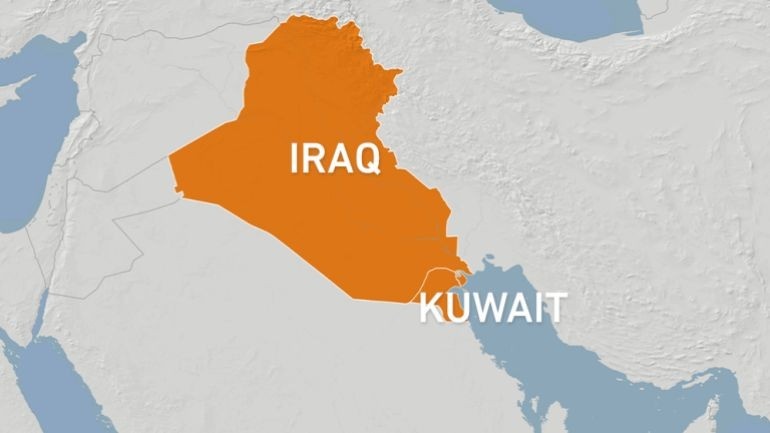
Gulf Cooperation Council Urges Iraq to Retract UN Map Amid Kuwait Maritime Sovereignty Dispute
Riyadh, Saudi Arabia — The Gulf Cooperation Council (GCC) has taken a firm diplomatic stance in a growing maritime dispute between Iraq and Kuwait, calling on Baghdad to withdraw a recently submitted map and list of geographic coordinates that were lodged with the United Nations and which Kuwait says violate its sovereignty over long-recognised maritime areas. The escalating disagreement threatens to strain relations between neighbours who share complex historical ties.
The dispute stems from two sets of coordinates and associated maritime boundaries that Iraq submitted to the UN Secretary-General on January 19 and February 9, 2026. Iraq’s filings, which include its territorial sea baselines, contiguous zone, exclusive economic zone and continental shelf limits, were presented as part of Iraq’s interpretation of its maritime rights under the 1982 United Nations Convention on the Law of the Sea (UNCLOS) , which governs ocean space and resources.
However, Kuwait has strongly objected, asserting that several of the coordinates encroach upon portions of its territorial waters, maritime areas and permanent “elevations” — such as Fasht Al-Qaid and Fasht Al-Aij — areas long viewed by Kuwait as within its sovereign maritime space and not previously contested by Baghdad in bilateral discussions. These submerged features have significant implications for resource rights and jurisdiction.
GCC Response and Regional Backing
In a statement issued from the Gulf bloc’s headquarters, GCC Secretary-General Jasem Mohamed Albudaiwi urged Iraq to immediately withdraw the list of disputed coordinates and the submitted map, warning that the filing undermines Kuwait’s sovereignty and territorial integrity. Albudaiwi underscored the importance of adhering to international law and the provisions of UNCLOS, while respecting bilateral agreements and memoranda of understanding previously concluded between the two countries.
The GCC’s press release reiterated the Council’s firm position that Iraq must respect existing agreements governing boundaries and that any unilateral action that could alter recognised maritime rights would be rejected by the six-member bloc. Albudaiwi noted that Kuwait and Iraq share deep historical ties and maintain relations rooted in mutual respect and neighbourliness, but he cautioned that missteps like the disputed submission risk eroding trust and hindering cooperation on other fronts.
Beyond the GCC’s formal appeal, individual Member States have voiced support for Kuwait’s position, demonstrating regional unity on the issue.
Qatar’s Ministry of Foreign Affairs publicly backed Kuwait, stating that border questions should be resolved within the framework of international legal mechanisms and bilateral negotiations rather than unilateral filings that could create precedents. Qatar also highlighted the need for dialogue grounded in legal norms and mutual respect.
Similarly, Saudi Arabia expressed serious concern over Iraq’s submission, particularly with respect to the jointly administered Saudi-Kuwaiti Divided Submerged Zone, whose natural resources and maritime rights are governed by long-standing bilateral accords dating back decades. Riyadh warned that Baghdad’s coordinates appear to extend into portions of this zone, raising additional sovereignty concerns that could affect resource exploitation.
The United Arab Emirates (UAE) and Bahrain also reaffirmed their solidarity with Kuwait, underlining the importance of responsible diplomacy and adherence to international law in resolving boundary disputes. The UAE specifically urged Iraq to consider historic and fraternal bilateral relations and to avoid actions that could destabilise ties in a region already facing numerous challenges.
Oman echoed these sentiments, urging respect for Kuwait’s sovereign rights over its maritime areas and highlighting the need for dialogue in accordance with international norms and the principles of good neighbourliness.
Iraq’s Position and Broader Implications
Baghdad, for its part, has maintained that its submission to the United Nations is a legitimate expression of its sovereign rights and is grounded in international law and longstanding legal practices that allow states to define their maritime boundaries. Iraqi officials argue that delimitation of maritime zones is a matter of national prerogative, intended to clarify jurisdictional boundaries and bolster legal certainty for resource management and maritime activities.
According to statements from Iraqi authorities, Kuwait previously deposited its own maritime maps with the UN — which Iraq said it was not consulted on — suggesting that Baghdad sees its action as reciprocal rather than provocative. Iraqi Foreign Minister Fuad Hussein called for the dispute to be addressed through dialogue and legal channels, emphasising Iraq’s commitment to resolving bilateral differences respectfully and in alignment with international standards.
While both sides have refrained from escalating the matter beyond diplomatic channels, the episode highlights lingering sensitivities over maritime jurisdiction in the northern Persian Gulf, a region with significant strategic and economic importance due to offshore oil and gas resources, shipping lanes, and fishing grounds. The dispute also pops up against the backdrop of past tensions, including the historic 1990 invasion of Kuwait by Iraq and subsequent UN mandates that defined border arrangements, which remain sensitive in the collective memory.
Call for Resolution Through Dialogue
Regional voices beyond the Gulf have urged calm and the use of diplomatic avenues to avoid inflaming the situation. Egypt’s Ministry of Foreign Affairs emphasised the necessity of constructive dialogue and respect for established legal frameworks as means to bridge differences and preserve regional stability in a volatile neighbourhood.
International legal experts note that maritime boundary disputes are common and can often be resolved through negotiation, mediation, or arbitration without escalating into broader conflicts. The existence of UNCLOS provides mechanisms for peaceful resolution, though both parties must agree to submit to such processes.
Historical Context
The Iraq-Kuwait maritime boundary has been a subject of international attention since the 1990s, when UN resolutions following Iraq’s invasion established a demilitarized zone and addressed border issues. Subsequent agreements have sought to normalise relations, but residual sensitivities remain.
The current dispute suggests that full resolution of maritime boundaries may still require additional work, despite previous understandings. The involvement of GCC states backing Kuwait adds diplomatic weight to the Kuwaiti position.
Looking Ahead
As this maritime sovereignty dispute unfolds, all parties involved appear to advocate for measured engagement and legal clarity — though how and when a resolution might be reached remains to be seen. The coming weeks may see intensified diplomatic contacts as Iraq responds to regional pressure.
For Kuwait, the issue is about protecting what it views as its sovereign territory. For Iraq, it’s about asserting its rights under international law. For the GCC, it’s about standing with a member state and maintaining regional unity.
Map dispute, diplomatic pressure, and the search for a peaceful resolution in Gulf waters.

