


[ad_1]
MILAN, Italy — South Africa’s Paramount Group is preparing to produce composite blades for Soviet-designed helicopters and is setting up a production facility in the United Arab Emirates, hoping to secure orders from African operators who need to maintain and upgrade the aircraft.
Last month, Paramount said it signed a strategic partnership agreement with UAE-based AAL Group to locally manufacture composite main and tail rotor blades for Mi helicopters.For over two decades, the UAE entity has provided a full range of maintenance and repair services for Mi series rotorcraft
“Our activities with the AAL Group in the UAE will include, but are not limited to, managing advanced manufacturing plants, assembly lines and maintenance repair and operations facilities to repair and upgrade helicopter fleets for our African partners,” said Steve Griessel, Global Head of Paramount. the CEO told Defense News.
There are more than 23 Mi helicopter operators across the continent, with Togo being the most recent new delivery of two Mi-17 transports in December.
These aircraft are often equipped with metal blades, which are subjected to a lot of stress during intense operations. This increases the type of damage they suffer, making them more susceptible to faster erosion. Traditional metal helicopter blades are made of titanium alloy, and Russia is one of the world’s largest exporters of titanium alloy. Citigroup recently warned that exports of vital metals could be next on Moscow’s list of restricted natural resources to counter Western sanctions.
A significant portion of the Soviet-era helicopters in the African fleet are out of service, leading them to either be grounded for long periods of time or retired entirely. This is in part due to customers being unable to maintain their fleets, a situation that may have been exacerbated by the impact of the war in Ukraine on global supply chains and deliveries. In addition, several African countries face severe budgetary constraints.
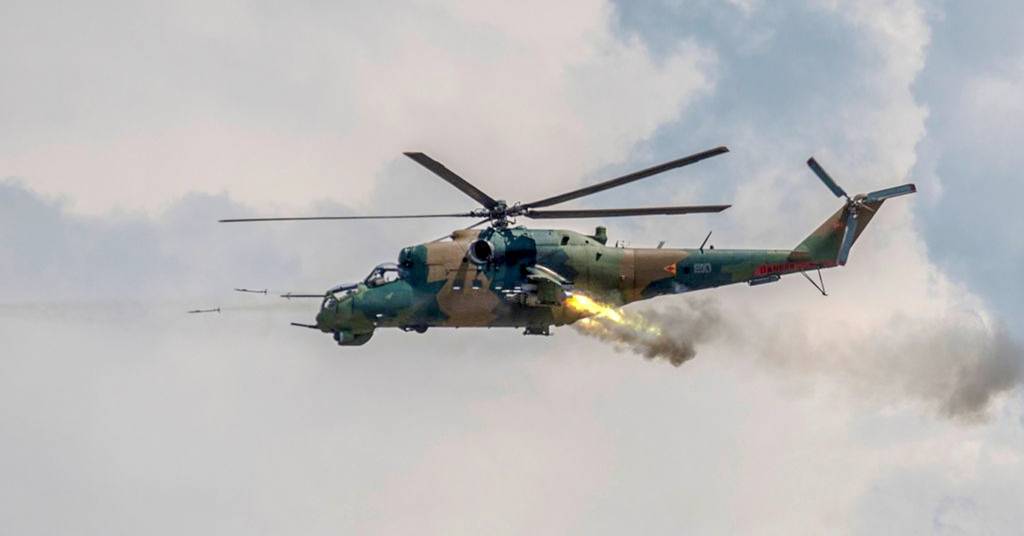
Paramount supplies the Mi-17 and Mi-24 with composite blades, a fully interchangeable replacement for the original metal blades, with logistical and operational advantages.
“Metal blades have an upper limit of about 4,000 hours of operation, while composite blades are almost unlimited, closer to 20,000 hours. In general, most aircraft have limits based on hours of operation and number of hours. Time limit, which is the number of years of active operation , will depend on storage, operating conditions, etc., but composite blades will outlast metal blades by far,” Paramount Aerospace Systems CEO Brian Grayling told Defense News.
This alternative also allows individual blades to be replaced rather than entire sets when damaged. While they are more expensive, the company says the longer life they offer makes overall operating costs significantly lower. Composite blades become economically viable after 200 flight hours per aircraft.
related
:quality(70)/cloudfront-us-east-1.images.arcpublishing.com/archetype/W5W5MY76EFHA7LU3MNKL6SYA3A.png)
While African customers may have previously turned to Russian manufacturers for upgrades and MRO, the UAE installation could give Paramount a significant advantage in capturing new business opportunities and closing some existing gaps.
The group has provided MOR services to modernize Algeria’s Mi-24s to SuperHind standards. Many systems have also been successful with Middle Eastern customers over the past few years. While Africa and the Middle East both face very different challenges and have different defense budgets, they also share interesting similarities and needs, Grisel said.
“For example, there are common requirements for interoperability; ready use of our land vehicles in border patrol, policing and peacekeeping and military support operations,” he said. “The need to quickly replace the capabilities of technology and mission systems from a reconnaissance scenario to an engagement scenario is another reason.
Elisabeth Gosselin-Malo is Defense News’ Europe correspondent. She covers a wide range of topics related to military procurement and international security, with special coverage on the aviation industry. She is based in Milan, Italy.
[ad_2]
Source link

