


[ad_1]
John Solomo
Nicosia [Cyprus]April 17 (ANI): Syria has become the world’s largest drug state as its production of the addictive amphetamine known as Captagon or “poor man’s Coke” has become the country’s economic lifeline and its largest Export products earn more than 90% of the country’s foreign exchange.
Read also | Turkey Earthquake: A magnitude 4.0 quake hits Afsin, no casualties reported.
Notably, the Collins Dictionary defines a “narco country” as a country in which the illicit trade in narcotic drugs forms a significant part of its economy.
Captagon, a synthetic stimulant composed of amphetamine and caffeine, is an internationally recognized illegal drug (UNODC, 2021).
Read also | China “advises” the Philippines to “clearly oppose” Taiwan’s independence.
In 1961, a German pharmaceutical company first introduced Captagon to treat health problems such as ADHD, narcolepsy and depression. However, a few years later, scientists realized the addictive nature of the drug and its detrimental effects on physical and mental health, and the drug was banned.
Captagon is one of the most popular recreational drugs (party drugs) among young people in Gulf countries. It is also used by armed men because it creates a feeling of invulnerability, hence, it is sometimes called “Captain of Courage” or “Jihad Magic Potion”. Also, it is used by dieters, students cramming for exams, and people who have to work double shifts or work nights or work two jobs to make ends meet.
A pill may cost as little as $1 at the time of manufacture, but since it has to go through various routes and checkpoints to reach the buyer, smugglers, soldiers, secret police, warlords of all kinds have to pay massive bribes, and corrupt customs officials, So its price has increased by $14-20.
According to experts, Syria is currently the country that produces the most captagon, and it is mainly exported to the Gulf region. After President Bashar al-Assad’s brutal crackdown on protesters in 2011, many countries have imposed sanctions or halted trade with Syria, so the regime has partnered with Lebanon’s Hezbollah to boost the drug’s The production is mainly exported to the Gulf countries.
The growth in illicit drug production and use has reached such alarming proportions that the United States last year introduced the Captagon Act, linking its trade to Syria’s Assad regime and describing it as a “transnational security threat”.
Captagon pills have been found in milk packaging, cardboard rolls, egg cartons, fresh fruit and machine packing boxes. They’ve also been found buried in shipments of tea and milk, and smugglers often surprise authorities when they hide the pills in unlikely places.
The Center for Operational Analysis and Research reported in 2021 that the Assad regime had turned Syria into a “global center for Captagon production, now more industrialized, adaptable and technologically advanced than ever before.”
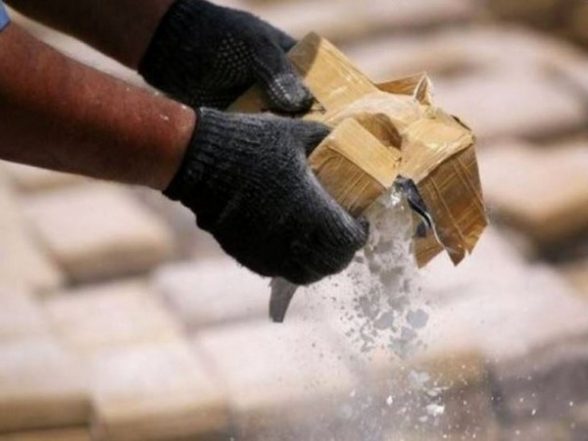
Every year there are reports of millions of Captagon pills being confiscated. The largest seizure took place in the Italian port of Palermo in July 2020, when Italian police confiscated more than 84 million captagon tablets, weighing about 15 tons, at market value from a ship from the Syrian port of Latakia. Estimated at $100 million.
In August 2022, customs officers at Istanbul’s Ambari port seized 12.3 million captagon pills with a total weight of 2.09 tons. The pills were found in a shipping container.
The following month, Saudi authorities seized some 47 million illegal drug pills hidden in flour at a warehouse in the capital, Riyadh.
In December, Jordanian customs officials seized a tonne of amphetamine tablets smuggled in date paste at the border with Iraq. A total of 6 million Captagon pills were found inside two refrigerated trucks.
On Friday, Lebanese security forces seized about 10 million captagon pills that were destined to be smuggled into Senegal and then on to Saudi Arabia.
From time to time the Syrian regime tries to show the world that it is trying to crack down on the production and export of Captagon from its territory. On June 29, 2022, Syrian anti-narcotics forces seized a record 2.3 tonnes of Captagon, while in an earlier raid they found 249kg of Captagon hidden in containers of steel machinery , preparing to leave the Mediterranean port of Latakia.
The British government recently imposed new sanctions on Bashar al-Assad’s regime, emphasizing that drugs are the lifeline of the Syrian state, which is estimated to have made around $57 billion from the illicit export of fenetagon, worth roughly a third of the total trade. times the Mexican drug cartels.
It is now a well-known fact that powerful figures close to Bashar al-Assad were involved in all stages of Captagon production, smuggling and distribution. The Syrian president’s younger brother, Maher al-Assad, who commands the 4th Armored Division, oversees much of Captagon’s production and distribution, according to The New York Times.
Bashar al-Assad could use control of Captagon pill production and exports as a bargaining chip in his relations with Gulf states that are considering whether to accept Syria’s return to the Arab states. He could commit to reducing Captagon production and exports if those countries, especially Saudi Arabia, restored full diplomatic relations with Damascus. Otherwise, he can flood them with tons of extra highly addictive drugs.
However, no matter what promises he makes to Arab leaders, Bashar al-Assad is unlikely to completely stop the production of Captagon in Syria, the drug that is the lifeline of his regime and its biggest export product. (Arnie)
(This is an unedited and auto-generated story from a Syndicated News feed, the content body may not have been modified or edited by LatestLY staff)
share now
[ad_2]
Source link

