


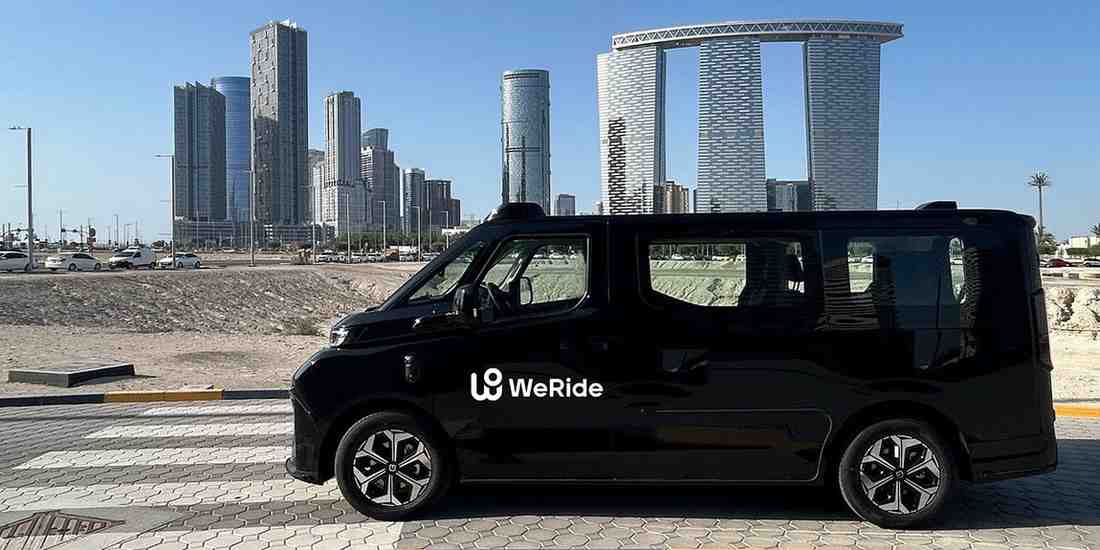
Abu Dhabi Launches First Fully Driverless Taxis in MENA, Pioneering New Era of Transport
ABU DHABI, UAE – In a landmark move for the Middle East, the Emirate of Abu Dhabi has officially launched commercial operations of fully driverless vehicles, becoming the first jurisdiction in the Middle East and North Africa (MENA) region to deploy Level 4 autonomous vehicles for public use. This strategic initiative transitions the technology from testing to a revenue-generating service, marking a significant leap in smart urban mobility.
The launch, managed by the Integrated Transport Centre (Abu Dhabi Mobility) under the supervision of the Smart and Autonomous Systems Council, signals Abu Dhabi’s ambition to be a global leader in future transport solutions.
Permits Issued to Global Tech Leaders
The ITC has granted the first two operational permits for this commercial service to international pioneers in the autonomous vehicle sector:
WeRide: In collaboration with Uber and Tawasul.
AutoGo‑K2: In collaboration with ApolloGo, the autonomous vehicle platform of Chinese tech giant Baidu.
The permits were issued following a rigorous testing and validation process to ensure the vehicles’ performance, sensor systems, and real-world responses are fully adapted to Abu Dhabi’s unique traffic conditions. WeRide’s robotaxis, for instance, had already completed over 800,000 kilometers in public road trials. AutoGo-K2 demonstrated a rapid progression to fully unmanned operation, logging over 100,000 test kilometers in a matter of months.
Unprecedented Safety and Real-Time Monitoring
To ensure public safety and regulatory oversight, the ITC will monitor all autonomous vehicle movements via an advanced, real-time digital platform—the first of its kind in the MENA region. This system enables live tracking, incident logging, and immediate analysis of any operational violations, forming a comprehensive safety framework for the commercial rollout.
Strategic Milestone for a Smart Mobility Vision
Dr. Abdulla Hamad AlGhfeli, Acting Director General of the ITC, hailed the authorization as a “strategic milestone.” He emphasized that the initiative reflects the emirate’s forward-looking vision to safely and efficiently integrate future technologies into its urban fabric.
This development is a core component of Abu Dhabi’s broader strategy to build a fully integrated smart mobility ecosystem. The move is expected to accelerate the adoption of autonomous solutions, reduce traffic congestion, improve road safety, and serve as a model for sustainable urban development.
Also Read: Majid Al Futtaim Dismisses IPO Speculation, Confirms Commitment to Private Ownership
From Testing to Commercial Reality: Why It Matters
The commercial launch of Level 4 driverless cars represents a major shift from pilot programs to a functional, scalable transport service. By allowing vehicles to operate without a human driver, Abu Dhabi is not only achieving a technological breakthrough but also a regulatory one. The emirate has successfully developed the frameworks, monitoring systems, and approval processes required for safe commercial deployment, setting a regional benchmark.
The implications extend beyond the novelty of driverless travel. This initiative promises greater mobility access, potential reductions in traffic accidents, and the creation of new economic opportunities in sectors like robotics, AI, and data analytics.
The Road Ahead
With the first permits active, the focus now shifts to expansion. The next phase will likely involve increasing the fleet size, extending operational zones beyond the core urban area of Abu Dhabi, and welcoming more operators. The foundational real-time monitoring system is designed to support this scale-up while maintaining stringent oversight.
This launch also paves the way for more ambitious projects, such as a planned autonomous vehicle test hub in Abu Dhabi, fostering partnerships between government, research institutions, and the private sector. It lays the groundwork for a future where autonomous cars, drones, and smart infrastructure seamlessly converge, solidifying the UAE’s position at the forefront of transport innovation.

