


[ad_1]
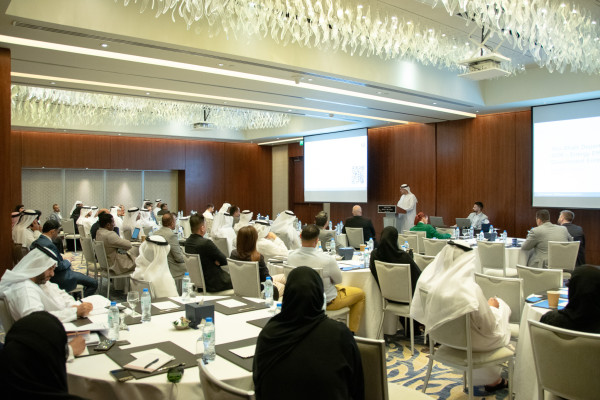
ABU DHABI, 6th April, 2023 (WAM) — The Department of Energy, DoE, hosted the first of a series of seminars on energy efficiency policy planned for this year, with more than 70 participants representing 42 government-owned Entities and companies actively involved in the Emirate of Abu Dhabi.
The workshop aims to enhance overall engagement and support the implementation of the guiding principles of energy efficiency policies in government buildings and facilities, as part of the Ministry of Energy’s leading initiative to support the realization of Abu Dhabi’s Demand Side Management (DSM) and Energy Rationalization strategy 2030 The goal is to achieve a 32% reduction in water and a 22% reduction in electricity by 2023 through the implementation of a series of programs in cooperation with industry stakeholders.
The workshop provided an overview of energy efficiency policies and the steps to implement them, showcased best practices for reducing consumption in buildings and facilities by implementing energy and water efficiency measures as well as raising awareness and fostering a culture of sustainability. Participants also exchanged experiences and discussed ways of cooperation with various stakeholders, experts and energy service companies.
Ahmed Mohammed Al Rumaithi, Abu Dhabi’s Undersecretary for Energy, said: “In 2023, the Year of Sustainability, we will build on our vision to achieve net-zero emissions in the UAE 2050 and Abu Dhabi Vision 2030.”
“Hosting such workshops will provide government entities and companies with the tools and knowledge to better manage their buildings and facilities to minimize their carbon footprint and help reduce costs and operating expenses resulting from energy consumption. It will also It will enable us to build a culture of energy and water efficiency and promote the principle of leading by example across government-owned entities and companies in Abu Dhabi,” he added.
The DOE workshop aligns with the UAE’s commitment to achieve net-zero emissions by 2050, making the country the first in the region to work towards this ambitious goal. In addition, the journey to carbon neutrality presents significant economic opportunities that directly support the UAE’s vision to develop as one of the most resilient and dynamic economies in the world.
Ahmed Al Falasi, Acting Executive Director, Energy Efficiency Sector, said: “These workshops are in line with the approved Demand Side Management Strategy and aim to create an implementation framework to assist government entities in rationalizing water and electricity consumption and adopting effective conservation measures in their premises and facilities .”
“These workshops are consistent with DOE’s role as a policymaker and regulator, responsible for issuing industry policies, strategies and regulations and ensuring their implementation and compliance. We provide participants with the tools to develop internal policies, programs and initiatives, raise awareness and tools to improve the methods used for energy and water efficiency,” he added.
Wael Ezzeldin, Acting Head of the Energy Efficiency Policy Unit, commented: “Our workshops will create awareness of the importance of DOE energy efficiency policy as an enabler for building retrofit and behavior change programs. They will help participants develop work plans , set goals, and implement energy and water conservation measures within their offices and facilities.They will be able to assess energy and water efficiency performance through a 7-step process, starting with issuing internal policies and assigning energy champions to collect and analyze data, establish benchmarks and benchmarking, setting targets, conducting technical assessments and conducting audits. In addition, they will be able to develop action plans by defining technical measures and targets for each building and identify the roles and resources required.”
Notably, the Emirate of Abu Dhabi’s Demand Side Management and Energy Rationalization Strategy 2030, launched in 2019, has yielded good results so far, saving 6,183 GWh of electricity during 2019-2020 through the ongoing program year, which is equivalent to reducing the emission of about 3.2 million tons of carbon dioxide.
[ad_2]
Source link

