


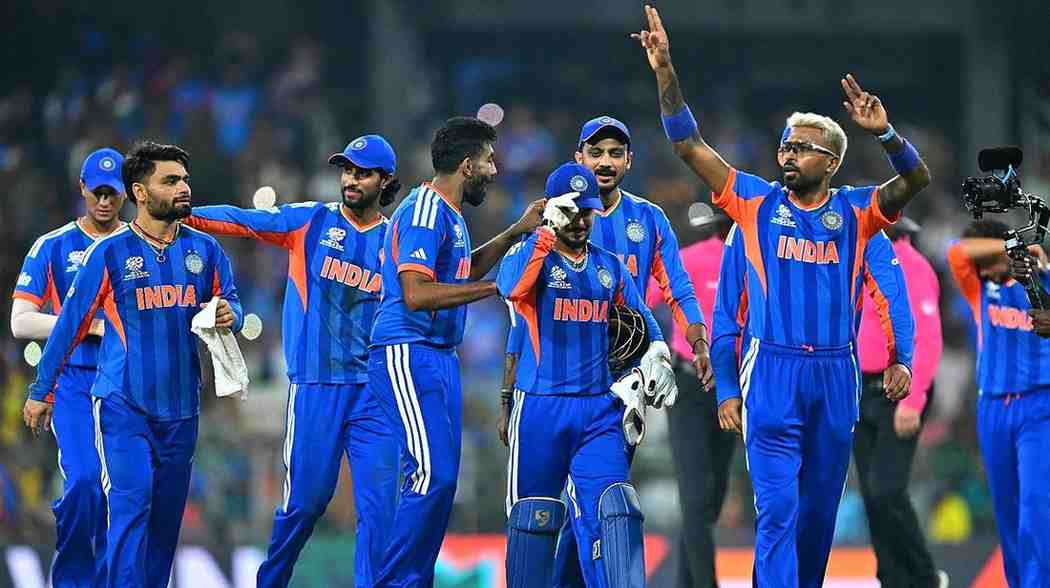
India Dominate Pakistan by 61 Runs in High-Voltage T20 World Cup Clash at Colombo
Colombo, Sri Lanka — In a highly anticipated ICC Men’s T20 World Cup 2026 fixture at the R. Premadasa Stadium on February 15, India delivered a commanding 61-run victory over Pakistan, reinforcing their supremacy in the shortest format and sending millions of fans into celebration mode.
The match, always more than just a sporting contest, carried the weight of intense public interest and historical rivalry between the two neighbouring nations. From diplomatic tensions preceding the tournament to the absence of customary handshakes, the fixture was layered with context that extended far beyond the boundary rope.
India’s Innings: Kishan Powers Competitive Total
Opting to bat first after winning the toss, India posted a competitive 175 for 7 in their allotted 20 overs. While captain Suryakumar Yadav contributed a useful 32, the innings belonged entirely to opener Ishan Kishan, whose explosive 77 off just 40 balls provided the momentum India needed.
Kishan’s innings was a masterclass in aggressive batting—powerful strokes across the line, calculated risks, and relentless intent that ensured India remained ahead of the required rate throughout the powerplay and middle overs. His 40-ball blitz included eight fours and four sixes, dismantling Pakistan’s bowling attack and shifting the pressure firmly onto the chasing side.
Contributions from the middle order, including valuable cameos from Tilak Varma, Shivam Dube, and Rinku Singh, helped India recover from a brief mid-innings stagnation and push past a challenging total that ultimately proved far beyond Pakistan’s reach.
Pakistan’s Chase Collapses Under Pressure
In response, Pakistan’s chase never gained traction. The innings unravelled quickly as they were bundled out for 114 in 18 overs, falling 61 runs short of the target.
Early wickets destabilized the chase, with key batters Sahibzada Farhan and captain Salman Ali Agha dismissed cheaply, leaving the middle order exposed to India’s relentless bowling attack. Hardik Pandya and Jasprit Bumrah led the charge, maintaining constant pressure through disciplined lines, variations in pace, and unerring accuracy.
By the time the innings concluded, it was evident that India’s bowlers had exerted complete control. Pakistan never recovered from the early setbacks, and the required run rate ballooned beyond reach as wickets tumbled at regular intervals.
Post-Match Reactions: Suryakumar Dedicates Victory to Nation
After the match, India captain Suryakumar Yadav dedicated the victory to his nation rather than focusing on personal achievements. In his post-match comments, Suryakumar said simply: “This is for India,” underlining that the win was meant for Indian fans and people back home. He praised his team’s brand of cricket and singled out Kishan’s innings for its excellence and significance.
Kishan himself acknowledged the extra pressure inherent in an India–Pakistan fixture, stating it is “a special game for us and our country,” explaining how such encounters carry emotional significance beyond a regular World Cup group match.
Pakistan Captain: “Look at the Big Picture”
Pakistan captain Salman Ali Agha struck a more reflective tone as he addressed the media. While admitting that Pakistan did not perform to their potential, his focus was on taking a broader view of the tournament.
“You have to see the big picture,” Salman said, emphasizing that emotions inevitably run high in a contest of such magnitude. He urged his team to regroup quickly for their remaining matches and aim for qualification to the Super Eight stage rather than dwell on this defeat.
Beyond the Scoreline: Politics and Protocol
This match was infused with context well before the first ball was bowled. Tensions between India and Pakistan—both on and off the field—led to unusual decisions around pre-match formalities.
In keeping with a precedent set at the Asia Cup 2025, Suryakumar and Salman did not shake hands either at the toss or after the match, continuing what India refers to as a “no handshake policy”—a gesture meant to respect victims of the Pahalgam terror attack and reflect solidarity with the Indian armed forces.
The backdrop also included diplomatic friction and political headlines. Earlier in the tournament build-up, Pakistan had initially threatened to boycott the match in solidarity with Bangladesh over security concerns, only to reverse course after discussions with the ICC and cricket boards.
What Comes Next
With this decisive win, India cemented their position atop Group A, ensuring their progression to the next stage of the T20 World Cup with an undefeated record. The team’s combination of explosive batting and disciplined bowling has established them as genuine contenders for the title.
Pakistan, meanwhile, now faces pressure to secure a crucial win against Namibia to stay alive in the tournament and keep hopes of a rematch with India alive in the Super Eight round. The margin of defeat has also damaged their net run rate, adding urgency to their remaining fixtures.
Conclusion: More Than a Game
Despite the one-sided nature of the contest, the cricket—as always in an India–Pakistan match—served as a reminder of the deep passions and narratives that surround the sport. Victories in arenas like the World Cup resonate far beyond the boundary ropes, carrying emotional weight for millions of fans across both nations.
For India, this victory represents continued dominance in high-pressure encounters against their arch-rivals. For Pakistan, it offers lessons in regrouping, resilience, and the unforgiving nature of tournament cricket.
Ishan Kishan’s 77. Suryakumar’s leadership. India’s relentless bowling. One unforgettable night in Colombo.

