


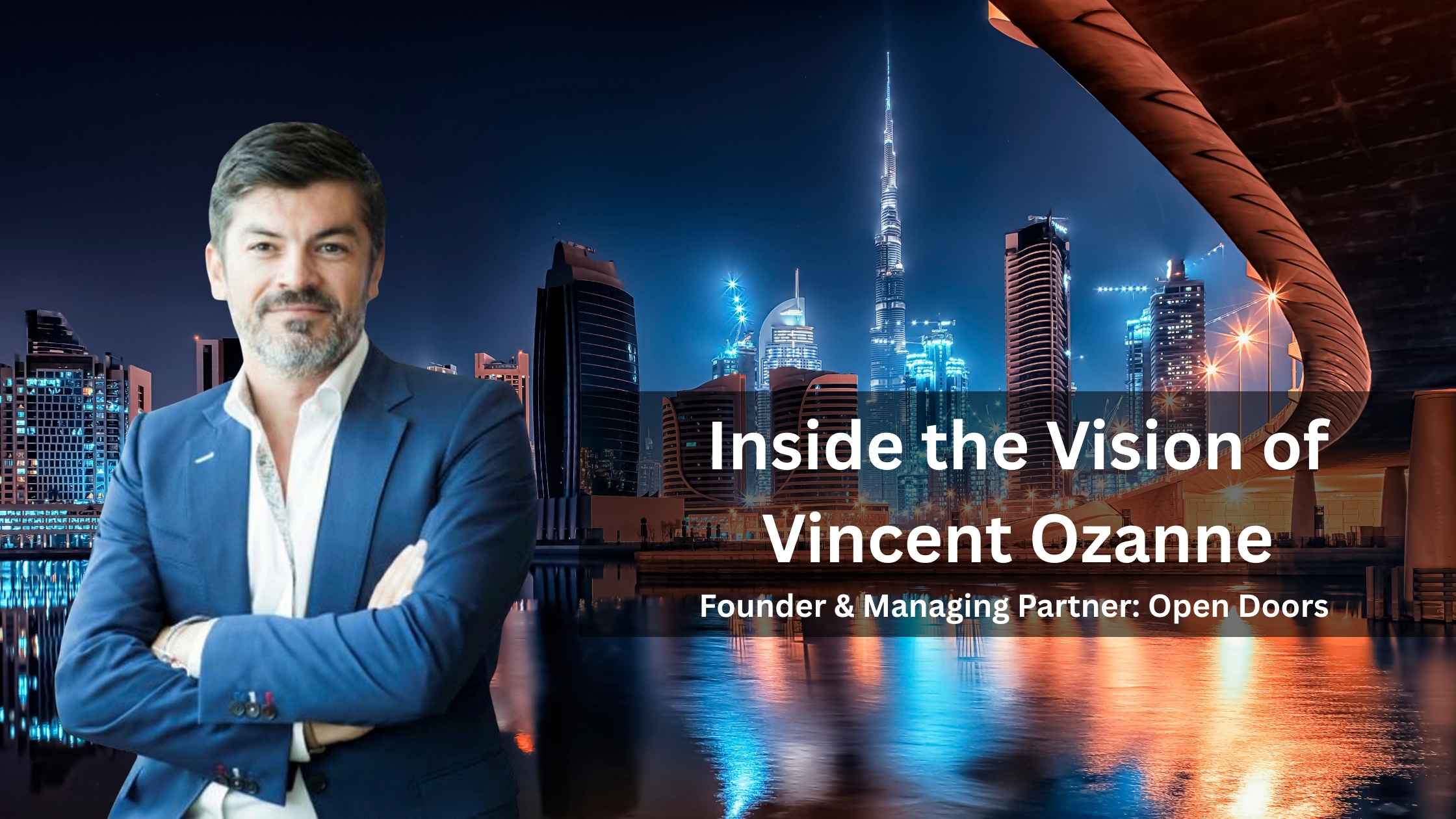
In an industry where operational excellence, digital transformation, and large-scale rollouts increasingly define success, few leaders understand the challenges as deeply as Vincent Ozanne. With an extensive background overseeing hotel openings for Accor across the India–Middle East–Africa region, and now as the Founder of OpenDoors, Vincent has become a driving force behind structured project management and scalable operational systems.
In this conversation with UAE Times, he shares his journey, insights into emerging industry trends, and the transformative role of AI and digital playbooks in shaping the future of hospitality, franchising, and multi-location businesses.
What motivated you to embark on a career in your industry?
“I first chose hospitality because it allowed me to travel and offered good job prospects. Later, as the person responsible for hotel openings across the Middle East, I was overseeing up to 30 projects a year. Each opening involves coordinating thousands of tasks and stakeholders. While the structure is largely repeatable, managing everything manually through spreadsheets and emails was incredibly time-consuming.
That experience convinced me that we needed better tools, which led me to implement Taskworld on a global scale and eventually to start OpenDoors so other organisations could benefit from a structured, collaborative approach to complex rollouts.”
What does your work at OpenDoors involve on a daily basis, and how do you collaborate with Taskworld to serve your clients?
“My days now revolve around helping organisations design and implement scalable operational systems. I typically start by reviewing the status of client projects in Taskworld, which gives me a real-time view of tasks, deadlines and any roadblocks. I also map out new clients’ existing processes and translate them into digital playbooks. Because many teams still use emails and spreadsheets, we take extra care to guide them through the transition.
I also collaborate closely with Taskworld’s product team to develop features that support network rollouts, such as AI-driven task summaries and customised dashboards. The rest of my day may include training sessions, webinars or writing content that shares best practices. Running OpenDoors means wearing many hats, but everything centres around creating structure and enabling collaboration.”
How is your industry evolving, and what trends do you foresee?
“The industries I work in—hospitality, franchising and multi-location services—are being reshaped by several major technology trends:
Artificial intelligence and machine learning :AI is increasingly used for forecasting demand, personalising offers and automating repetitive work. It also supports operational decisions by spotting risks, suggesting next steps and summarising complex information.
Contactless and mobile technology Guests and staff expect to manage everything from their phones. If a workflow only functions on a laptop in an office, it’s already outdated.
Smart devices Connected building systems and equipment increase efficiency but add complexity—requiring better monitoring and coordination.
Data analytics and revenue management Decision-making is shifting from instinct to real-time data, not just for pricing but also for rollout performance, compliance and quality.
Sustainability technology Tools for energy management, waste reduction and measurement are now standard, with concrete technical requirements.
All these trends create one common challenge: more moving parts to coordinate. My work with OpenDoors focuses on helping organisations put structure around this growing complexity so teams can benefit from these technologies instead of being overwhelmed by them.”
What challenges have you overcome, and how?
“The toughest challenges have always been related to change management, not technology.
Shifting mindsets: Many teams were used to managing projects through spreadsheets and email. Even though digital tools save time, some were uncomfortable with new systems. Helping them see the long-term value was essential.
Making adoption easy: Technology only succeeds if people use it. Taskworld’s intuitive interface helped non-technical users adopt the platform quickly.
Building pragmatic playbooks: At OpenDoors, we translate complex rollout processes into clear, action-driven checklists that mirror each stage of an opening. This boosts confidence and reduces the need for constant supervision.
Driving cultural change: By involving stakeholders early, offering hands-on training and celebrating small wins, we gradually shifted from ad-hoc communication to transparent, task-oriented collaboration.
By focusing on people and providing structured workflows, we turned what could have been a technology rollout into a genuine operational transformation.”
Can you share any pivotal career moments?
“One key turning point was taking over hotel openings for Accor’s IMEA region. At the time, we tracked thousands of tasks through a massive Excel file that was emailed back and forth. Errors and duplicated work were constant. I realised we needed a proper project-management platform.
Implementing Taskworld across the region was transformational. We converted our complex checklist into department-specific task lists, preloaded templates and added accountability tools. This structure even helped us respond quickly during the pandemic when hotels needed new hygiene protocols.
Another pivotal moment was when the system spread to other regions—Europe, France and beyond. As more teams uploaded their standards, we built a global library of reusable templates.
These experiences sparked the idea for OpenDoors: many industries face the same challenges, and structured digital playbooks can significantly improve rollout performance.”
How do you define your leadership style?
“I lead with a people-first mindset. Strong communication and a healthy work environment drive motivation and innovation.
I value collaboration and encourage diverse perspectives, which fosters transparency, creativity and better performance. I also prioritise critical thinking; teams that think critically generate smarter solutions. By helping colleagues understand how their work contributes to our goals, we co-create effective strategies and adapt quickly to challenges.”
Is your organization leveraging AI or other emerging technologies?
“Yes—AI is central to our work.
On Taskworld, the AI assistant summarises updates, flags bottlenecks and instantly answers questions about progress or overdue tasks.
At OpenDoors, we use AI as a conversion engine: – to digest client checklists
– turn them into structured toolkits
– reshape brand guidelines – standardise formats across markets
We also rely on AI to analyse project data and highlight patterns that affect rollout timelines. All of this is secured within Taskworld’s private infrastructure to ensure data protection.”
What are your long-term goals for your career or business?
“My long-term goal is for OpenDoors to become the go-to partner for multi-location businesses that want to scale without losing control.
In the coming years, I aim to:
- Deepen our partnership with Taskworld so our methodology becomes built-in through ready-made industry toolkits.
- Industrialise toolkit creation using AI for faster, more consistent implementation.
- Build a small but highly experienced global expert team.
- Create an academy model to help clients become fully independent in managing their playbooks.
Ultimately, I want brands to think: ‘We’re about to open 50 new locations—OpenDoors and Taskworld are the obvious choice.’”
Vincent Ozanne’s career reflects the evolving demands of multi-location businesses in a digital era—where clarity, structure and accountability are just as important as innovation. His work at OpenDoors highlights the power of combining human-centric leadership with technology that simplifies complexity. As industries continue to scale and embrace AI-powered systems, leaders like Vincent are shaping how organisations prepare for the future.

