


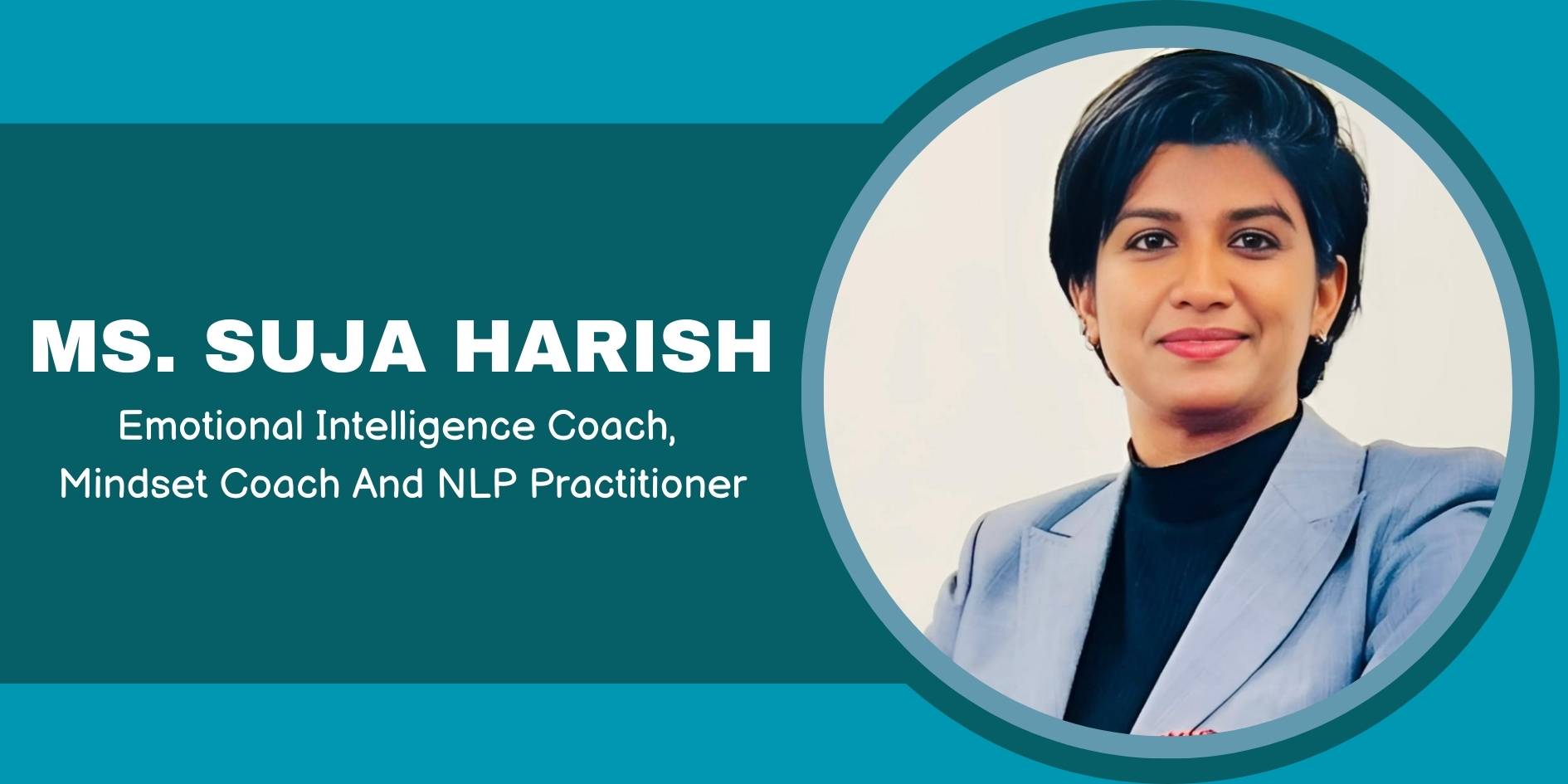
At UAE Times, we continue our commitment to highlighting thought leaders who are shaping conversations that matter. In an era defined by rapid change and increasing pressures, the importance of emotional intelligence and personal growth cannot be overstated.
In this feature, we speak with Ms. Suja Harish, a distinguished Mindset Coach, Emotional Intelligence Coach, and NLP Practitioner. With a deep passion for people development and a vision to build emotionally intelligent communities, Ms. Suja shares her journey, her insights on navigating complex human emotions, and her approach to empowering individuals and organisations alike.
Your Journey & Inspiration
Q: Ms. Suja, could you share what inspired you to step into the field of Emotional Intelligence and NLP?
A: My quest for self-awareness and curiosity about why we behave the way we do triggered my entry into the field of psychology, emotions, and behavioural patterns. Honestly, I noticed most people aren’t missing skills—they just need more clarity, self-awareness, and trust in themselves. Being a people development enthusiast, I always loved seeing others grow, so I was constantly looking for new ways to help.
Eventually, I realized what truly inspired me went deeper than strategies or planning. Emotional Intelligence and NLP gave me the words and tools to help people make real, lasting changes—not just on the surface, but at a deeper, transformative level.
Q: Was there a personal experience that shaped your passion for helping people understand their emotions better?
A: Yes, there were several defining moments, but one that stands out was during the COVID-19 pandemic. That period highlighted how resilient and adaptable people can be in the face of adversity. This awakening inspired me to focus on learning, healing, and eventually coaching. I knew if I could feel this transformation, so could countless others. Today, I help individuals build self-awareness and growth through microlearning workshops, coaching, and mentoring sessions.
Decoding Emotional Intelligence
Q: In simple terms, what does Emotional Intelligence mean, and why is it so important in today’s fast-paced world?
A: Emotional Intelligence is the ability to understand and manage your emotions while using that awareness to connect with others effectively. In a world that glorifies speed and artificial intelligence, EQ teaches us the value of “pause and reflection.” It acts as an inner GPS, guiding us through stress, helping us build thriving relationships, and enabling us to make decisions aligned with our values rather than fears.
Q: How can improving our EQ impact our personal and professional relationships?
A: Improving EQ can transform every area of life. When we deepen our emotional awareness, we communicate more clearly, resolve conflicts more effectively, and empathize with others. This not only strengthens personal relationships but also enhances teamwork and leadership at work. High-EQ individuals create healthier environments, inspire trust, and foster collaboration. Ultimately, EQ allows us to turn challenges into opportunities for growth and connection.
NLP in Everyday Life
Q: How does Neuro-Linguistic Programming (NLP) work alongside Emotional Intelligence?
A: It’s a powerful combination. While Emotional Intelligence helps you recognise and regulate your emotions, NLP provides practical strategies to reshape thought patterns and drive conscious change. By understanding the language we use to describe experiences, NLP helps shift limiting beliefs, overcome obstacles, and communicate more effectively. Together, EQ and NLP empower individuals to both tune in and tune up.
Q: Can you give us an example of how NLP techniques can help someone change their mindset or behaviour?
A: Certainly. A common challenge is public speaking. Many people struggle with it due to anxiety rooted in past experiences. NLP techniques can identify the internal dialogue fueling this fear—such as the limiting belief, “I’ll embarrass myself.” As a practitioner, I guide individuals to reframe such beliefs, recall successful moments, anchor positive emotions, and practice visualisation. With time, their mindset shifts from fear to confidence, allowing them to step onto the stage with ease and clarity.
Relevance for the UAE Community
Q: What unique challenges do people in the UAE face when managing emotions or stress?
A: Life in the UAE involves navigating a diverse mix of cultures, traditions, and expectations. This can create challenges such as language barriers, adapting to different social norms, and balancing one’s values with those of others in a multicultural environment.
Additionally, the fast-paced economy, pressure to succeed, and distance from family can increase stress. In workplaces and schools filled with people from across the globe, misunderstandings or feelings of isolation are common. In such a setting, emotional literacy—not just motivation—is key to building resilience and success.
Q: How can Emotional Intelligence help professionals, parents, and young adults navigate life in such a dynamic region?
A: For professionals, EQ fosters self-awareness and empathy, making it easier to lead and collaborate across cultures. For parents, it means modelling healthy emotional expression and teaching children to recognise and manage their feelings, thereby fostering resilience. For young adults, emotional intelligence acts as a compass—helping them adapt to change, manage stress, and build meaningful connections. Across all groups, EQ enables flexibility, compassion, and growth in a multicultural society.
Real Impact
Q: Could you share a success story where your coaching made a significant difference?
A: Every coaching session creates change, but one example stands out. I coached a senior executive who struggled with stakeholder management, team resistance, and high turnover. By helping him identify and manage his emotional triggers, and by applying NLP techniques to reframe communication, he was able to establish stronger rapport with his team. This not only improved relationships but also dramatically increased retention.
Q: What has been the most rewarding moment of your coaching journey?
A: The most rewarding moments are when clients say, “I finally feel like myself again” or experience an “Aha Moment.” One powerful example was a young woman who overcame years of self-doubt, launched her own company, and began mentoring others. She later called me her “Catalyst for Transformation,” a title I proudly carry on my social media today.
Common Myths
Q: What are some common myths about Emotional Intelligence and NLP?
A: Many people believe Emotional Intelligence means suppressing emotions or simply being nice. In reality, it is about awareness, alignment, and assertiveness—even when that involves tough conversations.
Similarly, some think NLP is mind manipulation. That’s a misconception. NLP is about reprogramming your own mindset—not controlling others. It helps people break free from limiting thoughts and step into their best selves. Often, people fear what they don’t understand, but once they experience NLP, the positive shift is undeniable.
Q: Why do people hesitate to seek help in these areas?
A: Mainly due to lack of awareness and the discomfort of vulnerability. Many still view seeking emotional support as a sign of weakness, but in truth, it is an act of courage. Choosing growth over comfort is real strength.
Practical Insights
Q: What are three simple things our readers can do today to strengthen their Emotional Intelligence?
A:
- Understand your triggers – Reflect on what prompts your emotional reactions.
- Power of pause – Take a breath before responding; choose response over reaction.
- Practice empathy – Ask, “What might they be feeling?” before making judgments.
Q: Do you personally follow any daily habits to stay grounded and self-aware?
A: Yes. I practice journaling regularly to reflect not just on events but also on my emotions. Additionally, I meditate daily, which helps me stay aligned with my life purpose—supporting others in reaching their full potential.
Looking Ahead
Q: What are your future goals as a Mindset Coach, Emotional Intelligence Coach, and NLP Practitioner?
A: My vision is to be a catalyst for transformation and a trusted partner in building empowered, thriving communities. Specifically, I aim to establish emotionally intelligent ecosystems across workplaces, homes, and schools. I envision a UAE where emotional intelligence and mindset strategies are integrated into leadership, parenting, and daily life.
Q: How do you hope to contribute to building more emotionally aware communities in the UAE?
A: I am actively working on projects with industry leaders, schools, and organizations to promote emotional literacy. Through Sigma Intelligence and Talent Hub, we are developing growth strategies delivered via workshops, collaborations, and community coaching. My goal is to spark a collective shift—from burnout to balance—across the UAE.
Final Message
Q: What message would you like to leave with UAE Times readers about mastering one’s emotions?
A: Self-awareness is the first step to success. Emotions are not obstacles; they are messengers. When you understand them, you unlock clarity. When you master them, you unlock freedom. Don’t suppress your emotions—use them to fuel the person you are becoming.
Q: How can people connect with you?
A: I can be reached on LinkedIn (Suja Harish FCIPD) or Instagram (@sigmaintelhub). You may also visit my coaching platform at www.sigmaintelhub.com. For those ready to begin their journey, I offer discovery calls—because transformation begins with a single step. You can also email me at info@sigmaintelhub.com
Conclusion
Our dialogue with Ms. Suja Harish underscores the essential role of Emotional Intelligence and NLP in today’s evolving world. Her emphasis on awareness, resilience, and empathy provides both practical guidance and a vision for building healthier, more connected communities.
As she continues her mission to embed emotional intelligence into workplaces, families, and educational institutions across the UAE, her work represents a forward-thinking approach to personal and collective growth.
At UAE Times, we are pleased to share her perspective with our readers—insights that not only inspire but also offer pathways to progress, balance, and transformation.

