


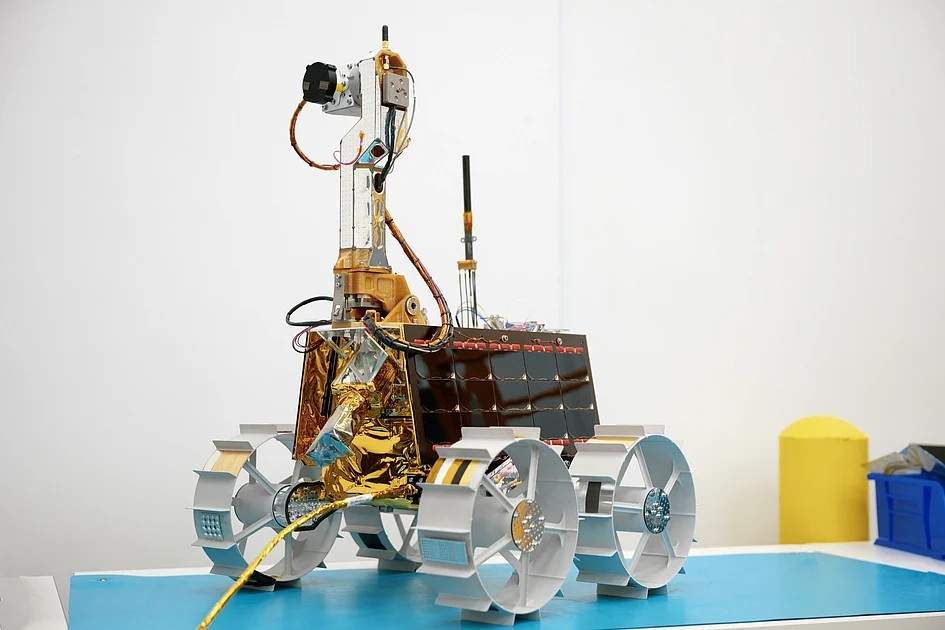
UAE Rashid Rover 2 Nears 2026 Mission: Aiming for Moon’s Far Side History
The United Arab Emirates is on the cusp of a historic space achievement. The Mohammed bin Rashid Space Centre (MBRSC) has announced the successful completion of critical tests for its Rashid Rover 2, advancing its ambitious plan to land on the Moon’s far side in 2026. This mission could position the UAE as the second nation to land a rover on the lunar far side, following only China’s Chang’e-4, and marks a giant leap in Arab space exploration.
Rigorous Testing Paves the Way for Lunar Landing
In recent weeks, MBRSC engineers have collaborated with teams from Firefly Aerospace in the United States to subject the rover to a stringent test campaign. These evaluations verified the rover’s electrical systems, software, and mechanical integration with Firefly’s Blue Ghost Mission 2 lander. Key milestones included successful wireless communication tests between the rover and lander and detailed simulations of the rover’s deployment and drive-off sequences onto the lunar regolith, ensuring it can navigate the Moon’s challenging terrain.
Targeting the Untouched Lunar Far Side
The mission’s destination—the Moon’s far side—presents unique scientific and engineering hurdles. This region, which never faces Earth, features a thicker crust and more cratered, rugged landscape than the near side. Rashid Rover 2 is equipped with advanced cameras and scientific instruments designed to study these conditions. Its payload will measure surface temperature, analyze soil properties (lunar regolith), and investigate the plasma environment and photoelectron sheath. This data is vital for understanding lunar geology and informing future in-situ resource utilization (ISRU) efforts for sustained lunar exploration.
An International Collaborative Effort
The mission underscores the global nature of modern space exploration. Rashid Rover 2 will carry scientific payloads from a consortium of international partners, including contributions from NASA, the European Space Agency (ESA), and institutions in Australia. Farah Zuberi, Director of Spacecraft Mission Management at Firefly Aerospace, emphasized that the successful testing is a critical step toward unlocking new insights into this mysterious region of the Moon.
Building on Experience: Lessons from Past Challenges
This mission builds directly on the legacy of the UAE’s first lunar attempt. The original Rashid Rover was lost in April 2023 when its lander, part of Japan’s Hakuto-R Mission 1, crashed during descent. The experience provided MBRSC with invaluable data on the complexities of lunar landing. Engineers have since redesigned and refined technologies for Rashid Rover 2, applying these hard-won lessons to significantly improve the mission’s chances of success.
A Context of Regional Space Ambition
The rover mission coincides with significant milestones in Arab space cooperation. A recent example is the launch of the ‘813’ satellite from China, a collaborative Earth-observation project involving engineers from the UAE, Saudi Arabia, Egypt, Jordan, Bahrain, Sudan, Kuwait, Oman, and Lebanon. Salem Al Qubaisi, Director General of the UAE Space Agency, stated such projects strengthen regional scientific capability and nurture space talent across the Arab world.
The Road to Launch and Lasting Legacy
Barring any delays, Rashid Rover 2 is scheduled for launch in early 2026 aboard the Blue Ghost Mission 2 lander. Its operational life on the lunar surface is planned for approximately 10 days. A successful mission would not only deliver groundbreaking science but also cement the UAE’s status as a leading space-faring nation. From the Hope Probe to Mars and astronaut missions to the International Space Station, the UAE continues to expand its cosmic footprint. Rashid Rover 2 represents the next bold chapter, pushing the boundaries of collaborative space exploration and aiming to make history on the Moon’s hidden face.

