



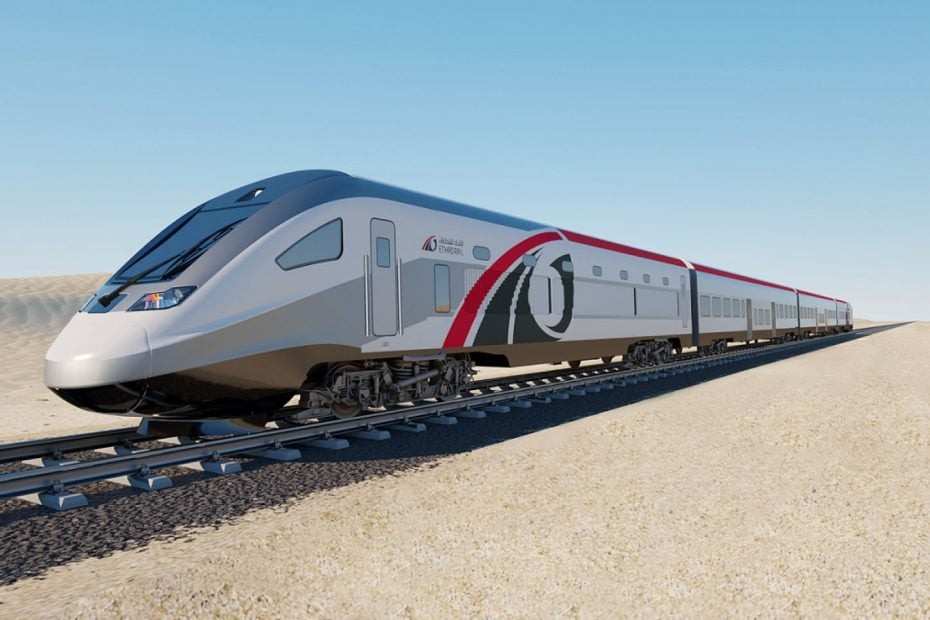
Etihad Rail to Connect Directly to Dubai’s Al Maktoum International Airport (DWC)
Dubai, UAE – In a major leap for integrated transport, the UAE’s national Etihad Rail project is officially planned to include a direct stop at Al Maktoum International Airport (DWC), seamlessly linking the country’s expanding rail network with its future aviation hub.
The confirmation came from Paul Griffiths, CEO of Dubai Airports, in an interview with FlightGlobal. He revealed that the vision is to create a fully integrated system where passengers can check in for their flights and drop off their luggage at train stations before even arriving at the airport.
This rail-air link is a cornerstone of a broader infrastructure transformation. The project’s significance is amplified by the recent announcement that all operations from the current Dubai International Airport (DXB) will be gradually transferred to Al Maktoum International (DWC) over the next decade. A new Dh128 billion passenger terminal at DWC, designed to handle up to 260 million passengers annually, makes this connection essential for future growth.
Addressing Record-Breaking Passenger Growth
The urgency for this expansion is clear. DXB, already operating beyond its intended capacity, recorded 46 million passengers in the first half of 2025 alone—its busiest first half on record. The shift to the more spacious DWC, supported by direct rail access, is critical to sustaining the UAE’s position as a global aviation leader.
The passenger-service branch of Etihad Rail is projected to handle a massive 36.5 million passengers annually by 2030, underscoring the scale of this national undertaking.
A Connected Nation: The Extensive Etihad Rail Network
The Etihad Rail network is designed for extensive connectivity, linking 11 key cities and regions across the UAE, including:
Abu Dhabi
Dubai
Sharjah
Ras Al Khaimah
Fujairah
Al Ain
The network will also extend to Ruwais, Al Mirfa, Al Dhaid, and Ghuweifat on the Saudi border, with a planned international link to Sohar in Oman via the Hafeet Rail project.
The Future: High-Speed Rail Between Abu Dhabi and Dubai
Looking further ahead, a new high-speed rail link will feature an electrified line connecting Abu Dhabi and Dubai. With six proposed stations—including Reem Island, Yas Island, Zayed Airport, and a stop near DWC—this service is projected to transport commuters between the two emirates in just 30 minutes, reaching speeds of up to 350 km/h.
Benefits and Challenges of a Unified Transport Vision
The integration of rail and air travel offers profound advantages:
Easier Airport Access: Direct, hassle-free travel to the airport.
Reduced Congestion: Less reliance on road traffic.
Faster Travel Times: High-speed connections between cities.
Sustainability: Electrified rail supports the UAE’s green goals.
Seamless Journeys: The ability to check-in at the train station revolutionizes the passenger experience.
Achieving this vision will require meticulous coordination between multiple government agencies and significant investment in supporting infrastructure, including station design, baggage handling systems, and advanced biometric technology for a “frictionless” passenger flow.
Also Read: UAE Unveils 6G Vision Following Record 145 Gbps Network Speed Test
Conclusion: A Model for Global Transport Integration
The planned Etihad Rail stop at Al Maktoum International Airport is far more than a simple station addition. It is a strategic linchpin in the UAE’s master plan to become a preeminent global hub for both air and rail travel. By aligning massive airport expansion with high-speed inter-emirate connectivity, the UAE is creating a scalable model for integrated mobility that aims to keep pace with booming demand for decades to come.

