


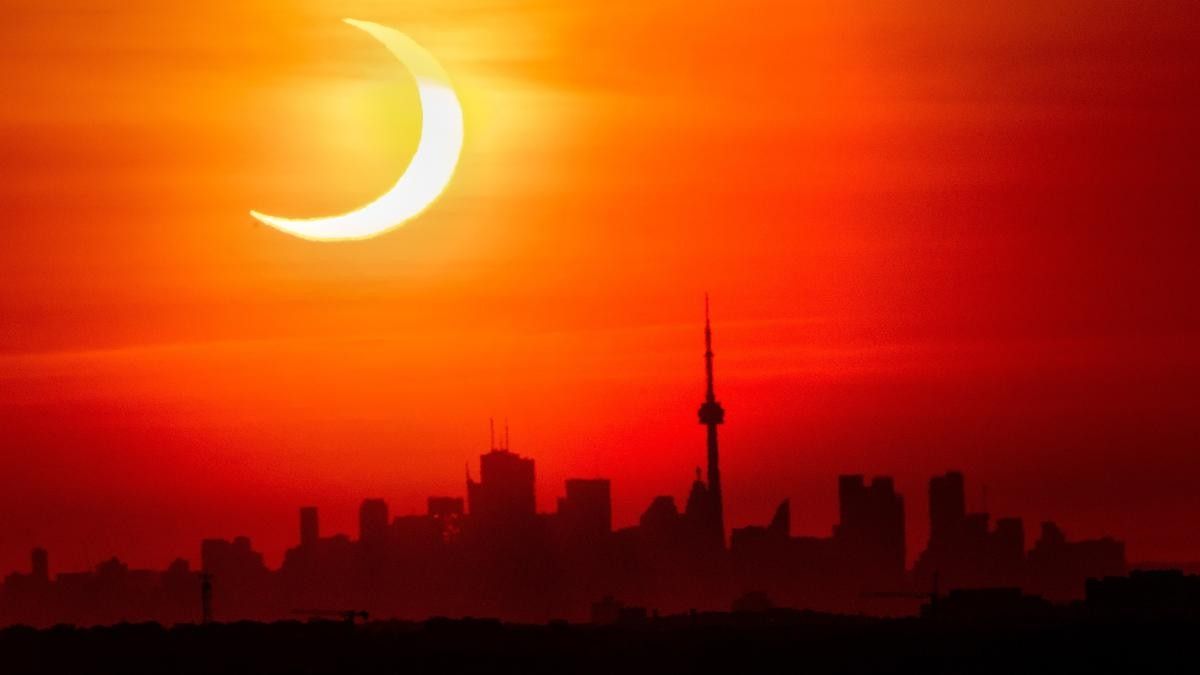
Solar Eclipse February 17, 2026: ‘Ring of Fire’ Annular Eclipse Visible from Antarctica, Partial in UAE
Global — The year 2026 opens with an extraordinary celestial event that has astronomy enthusiasts around the world eagerly looking skyward. On Tuesday, February 17, 2026, the first solar eclipse of the year will take place—an annular eclipse, popularly known as a “Ring of Fire” because of the spectacular way the Sun appears during the peak moment.
This cosmic phenomenon offers a stunning reminder of the dynamic geometry of our solar system, though its full glory will be visible only from remote regions of the Southern Hemisphere.
What Is an Annular Solar Eclipse?
A solar eclipse occurs when the Moon passes between Earth and the Sun, casting a shadow across parts of our planet. In an annular eclipse, the Moon is too far from Earth to completely cover the Sun’s disk. Because of this geometric alignment, the Moon leaves a bright ring of sunlight around its silhouette—a breathtaking visual phenomenon that gives this type of eclipse its dramatic name.
Unlike a total solar eclipse, where the Sun is completely obscured, an annular eclipse maintains a visible ring of light. This means proper eye protection is essential at all times to avoid permanent eye damage.
Critical safety reminder: Ordinary sunglasses are not sufficient. Certified solar eclipse glasses or appropriate solar filters are absolutely necessary for safe observation. Looking at the Sun without protection—even for seconds—can cause serious retinal damage.
When and Where Will the Eclipse Occur?
The annular solar eclipse on February 17 is expected to unfold within a window lasting several hours, with the central phases occurring around the middle of the day in some time zones. Global eclipse trackers note the event will span roughly from late morning into the afternoon in Coordinated Universal Time (UTC) , though exact local times vary by region.
Path of annularity—the narrow region where observers can witness the full “Ring of Fire”—lies predominantly over:
Remote areas of Antarctica
The surrounding Southern Ocean
An exceptionally narrow swath of the southern hemisphere with very few permanent human settlements
This makes the 2026 annular eclipse one of the most geographically isolated in recent years, with scientific expeditions and research stations serving as the primary human witnesses to the full phenomenon.
UAE Visibility: What Residents Can Expect
For residents of the United Arab Emirates, this cosmic spectacle will be partially visible. The Moon will not block the Sun completely from the local sky, meaning UAE residents won’t see the perfect “Ring of Fire.” However, there will be a partial eclipse effect, where a segment of the Sun is obscured by the Moon as it moves across its face.
Key viewing information for UAE residents:
The degree of coverage will vary depending on precise location within the Emirates
The partial phase will still require strict eye protection at all times
Even during partial coverage, looking at the Sun without certified eclipse glasses is dangerous
The event will occur during daytime hours—exact timing depends on location
Local astronomy experts have specifically cautioned the public against attempting to sight the eclipse with telescopic instruments without certified solar filters. Because the Moon will be close to the Sun in the sky during this event, even attempts to view the nearby Moon through optical equipment can be dangerous without proper safety gear.
How to Watch Safely
If you plan to observe the eclipse from the UAE or anywhere within the partial visibility zone, experts emphasize that safety comes first.
Approved viewing methods:
Certified solar eclipse glasses:
These specialized filters meet international safety standards (ISO 12312-2) and reduce sunlight to safe levels. Never use ordinary sunglasses, smoked glass, exposed film, or other makeshift filters.
Solar filters for telescopes/binoculars:
If using optical equipment, ensure certified solar filters are securely attached to the front of the instrument—never at the eyepiece.
Indirect viewing methods:
Pinhole projectors: Create a small hole in cardboard and project the Sun’s image onto a surface
Tree leaf shadows: During partial phases, gaps between leaves create natural pinhole projections showing crescent Suns
Online live streams: The safest option for those wanting to see the full annular ring
For those who want a more dramatic view—especially of the complete “Ring of Fire”—the best alternative is to follow live broadcasts or online streams hosted by astronomy organizations and space agencies. These feeds will capture the eclipse directly from regions where annularity occurs, offering the most vivid view available to those outside the path.
Scientific Significance
Beyond its visual spectacle, the February 17 eclipse offers valuable scientific opportunities:
Research opportunities for studying the Sun’s corona and outer atmosphere
Data collection on solar radiation and its effects on Earth’s upper atmosphere
Public engagement with astronomy and space science
Educational moments for schools and science centers
Astronomers and research teams in Antarctica will conduct observations that contribute to our understanding of solar physics and the Sun-Earth connection.
Looking Ahead: 2026 Celestial Events
Although this annular eclipse won’t be visible in its full glory from populated areas, it serves as a thrilling preview of more cosmic events to come. In 2026 alone, sky watchers around the world can look forward to:
Additional solar eclipses later in the year
Lunar eclipses offering blood moon views
Meteor showers and planetary alignments
Comet passages for those with optical aid
Each event reminds us of the dynamic nature of our solar system and the delicate celestial mechanics that govern it.
Conclusion: A Cosmic Moment Not to Miss
Whether you’re planning to view the partial eclipse in person through certified filters, create a pinhole projector for safe indirect viewing, or enjoy the full annular ring through expert live streams, February 17, 2026, offers an unforgettable astronomical moment.
This eclipse highlights the elegant dance of celestial bodies—the Moon perfectly positioned, though just far enough away to leave that brilliant ring of fire around its silhouette. It sparks curiosity about the mechanics of space and reminds us of our place in a vast, dynamic universe.
For UAE residents: A partial eclipse awaits—visible, fascinating, but requiring caution.
For those in the path: A rare Ring of Fire over Antarctica’s frozen expanse.
For everyone: A reminder to look up, stay curious, and protect your eyes while doing so.

