


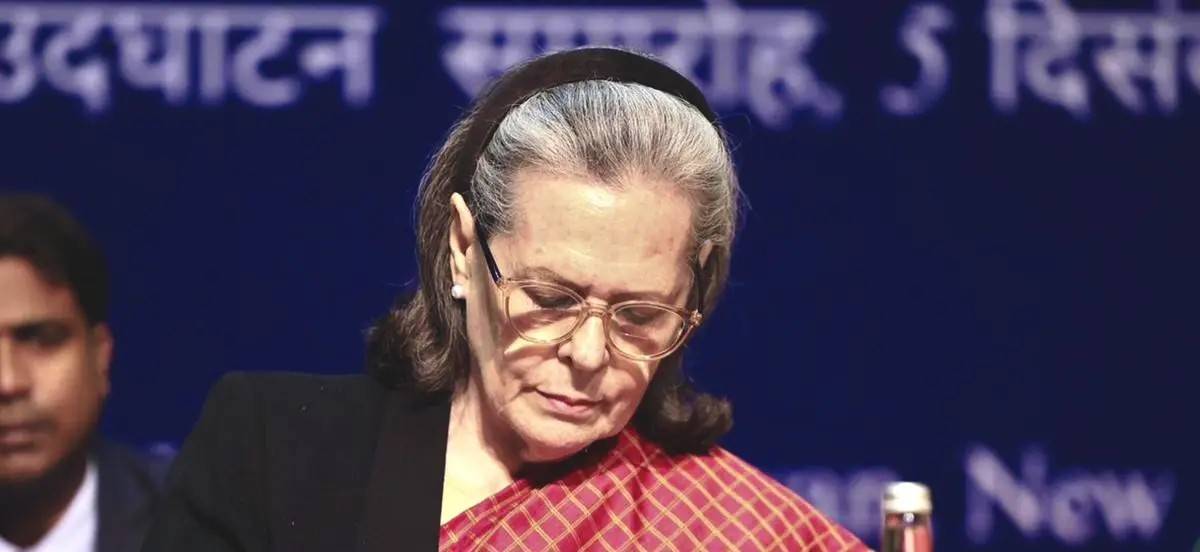
Sonia Gandhi Slams Modi Government’s ‘Silence’ on Iran’s Khamenei Assassination, Demands Parliamentary Debate
New Delhi, India — On March 3, 2026, Sonia Gandhi, Chairperson of the Congress Parliamentary Party, issued a sharp critique of Prime Minister Narendra Modi and his government over what she described as India’s “silence” in the aftermath of the assassination of Iran’s Supreme Leader Ali Khamenei, escalating a political row over foreign policy. In a strongly worded opinion piece, Gandhi argued that the government’s failure to explicitly condemn or respond to the killing goes beyond diplomatic caution, calling it an “abdication” of India’s moral responsibilities on the global stage rather than a neutral diplomatic stance.
The assassination of Khamenei — reportedly resulting from coordinated airstrikes by the United States and Israel — has dramatically escalated tensions across the Middle East, triggering retaliatory missile strikes and military responses throughout the region that have raised fears of wider war. Despite the global shockwaves from the incident, the Indian government has largely refrained from issuing a direct condemnation or clear policy statement on the targeted killing, maintaining a cautious public posture.
Gandhi’s Critique: India’s Moral Compass Questioned
In her column, Gandhi lamented that India’s official reaction — or lack thereof — signals tacit endorsement of actions she described as a “grave rupture” in international norms that India has historically championed. She asserted that when a sovereign nation’s top leader was killed amid a broader conflict, India’s longstanding tradition of respecting sovereignty and international law demanded a clearer and more principled response that reflects its non-aligned heritage.
Gandhi said that issuing only generalized statements urging restraint and dialogue was insufficient and did not live up to India’s diplomatic heritage, which has traditionally included speaking out against violations of sovereignty. She called for a more robust response that upholds the principles India has long espoused.
Timing of Modi’s Israel Visit Raises Questions
Gandhi also pointed to the timing of Prime Minister Modi’s recent foreign visit as particularly troubling and potentially compromising India’s neutrality. The Prime Minister returned from an official trip to Israel just 48 hours before the strikes that killed Khamenei, creating what she sees as an appearance of proximity to one side.
In Gandhi’s view, this sequence of events underscores a disconnect between India’s diplomatic engagements and its public communication on unfolding geopolitical crises, leaving India’s position unclear. She suggested that such timing could be interpreted as aligning India too closely with one side in a deeply polarised conflict, rather than maintaining a balanced position that reflects India’s diverse interests in the region.
Risk to India’s Global Standing
According to Gandhi, silence in this context risks undermining India’s credibility as an independent actor committed to global peace and stability, potentially alienating partners who expect India to speak on major issues. She claimed that many countries in the Global South and among India’s partners have either expressed concern over the killing or refrained from deeply partisan support — contrasting with what she described as New Delhi’s muted stance that leaves observers guessing.
Gandhi urged Parliament to hold a full debate into the matter, pressing for accountability and transparent discussion on what she sees as a critical foreign policy lapse that deserves public scrutiny.
Opposition Echoes Concerns
Her remarks reflect broader criticism coming from the opposition, which has characterised the government’s reaction as a failure of moral leadership that betrays India’s principles. Several opposition figures have echoed Gandhi’s claim that a lack of explicit condemnation amounts to abandoning India’s traditional diplomatic values rooted in sovereignty, peaceful conflict resolution, and non-interference.
Some leaders also raised concerns that the silence sends a dangerous message about India’s willingness to uphold international law when confronted with acts perceived as violations, potentially emboldening similar actions elsewhere.
Congress leaders have also argued that the situation places India in a difficult diplomatic position, particularly given its historic relationship with Iran — a partnership they note extends back thousands of years and has included formal treaties and economic ties. According to this perspective, ignoring a major incident affecting Iran without comment could strain these longstanding connections and reduce India’s influence in West Asian affairs.
Government’s Position: Cautious Restraint
On the other side of the debate, government officials and foreign policy analysts have pointed out that India’s response is consistent with its broader strategic approach, emphasising restraint, a call for de-escalation, and prioritising the welfare of Indian citizens in conflict zones over strong public statements.
The Ministry of External Affairs has reiterated India’s concern over rising tensions and urged dialogue between conflicting parties, reflecting a traditionally cautious stance rooted in avoiding overt alignment in complex regional disputes where India has interests on multiple sides.
Conclusion
As tensions continue to simmer in the Middle East with no end in sight, the row has widened into a significant political and diplomatic debate in India about the country’s role on the world stage. Whether the government will modify its public posture or engage in deeper parliamentary scrutiny remains to be seen, but the controversy underscores deep divides over how India should navigate its foreign policy amid rising global instability.
Sonia Gandhi vs Modi government: Should India speak out on Khamenei killing? Parliament debate looms.

