



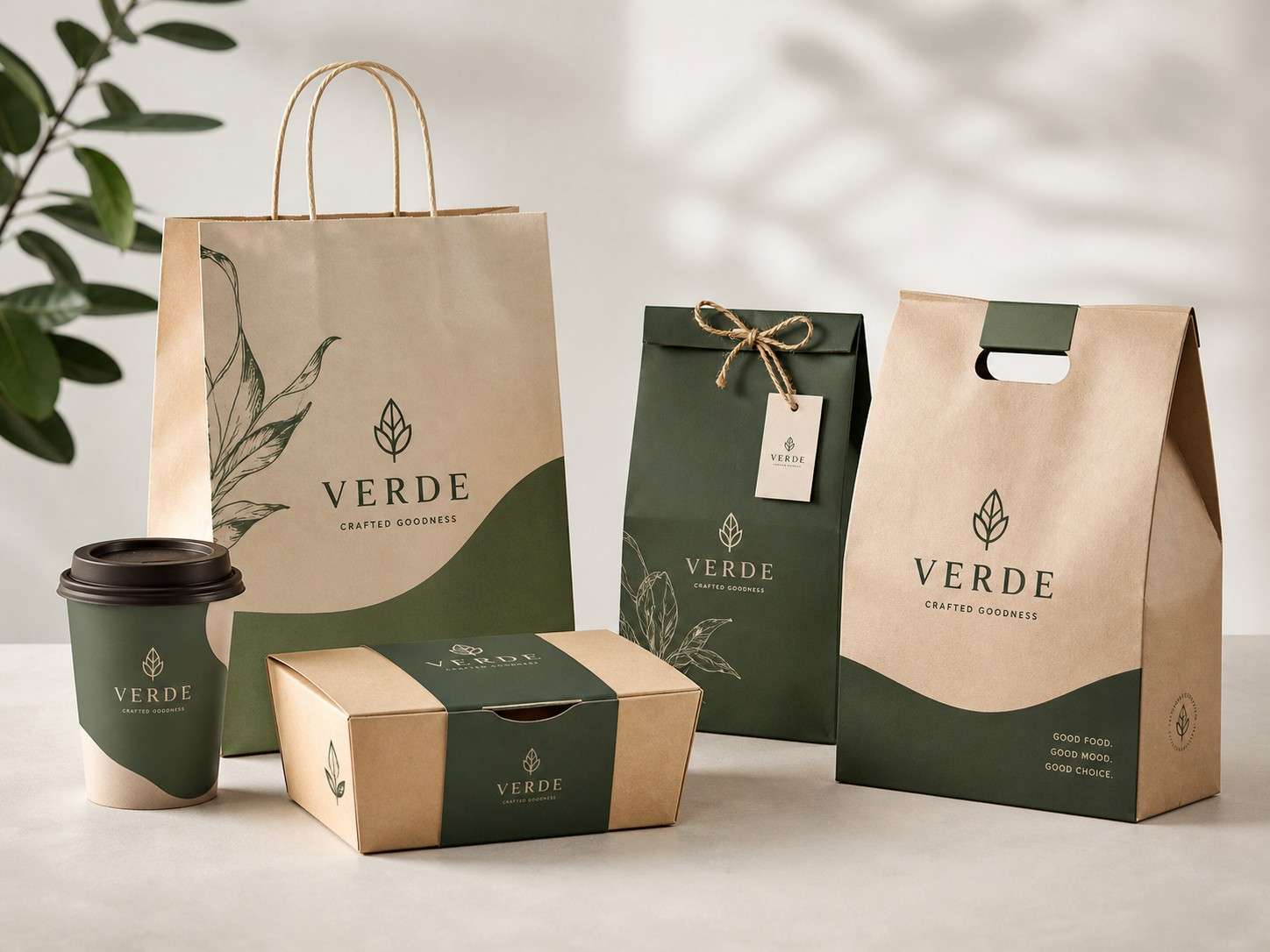
As a business grows, packaging becomes more than a practical necessity. A company may start with one product or one sales channel, but later expand into new categories, retail locations, delivery, gift packaging or e-commerce. At this stage, packaging must work as part of a brand system, not as a set of separate items.
For growing brands, consistency in paper packaging helps create recognition, trust and a more professional customer experience. A paper bag, takeaway package, gift bag or branded retail carrier may have different functions, but they should still feel connected to the same brand.
Packaging Builds Recognition
Customers remember brands through repeated visual signals: logo, color, typography, material, layout and overall design style. Packaging is one of the most visible ways to repeat these signals in real life.
A customer may see the brand in a store, carry a paper bag through a shopping mall, receive a delivery order or buy a gift package. If all these formats share the same visual language, the brand becomes easier to recognize.
Consistency does not mean that every package must look identical. A small cosmetics bag, a bakery bag with a window and a large retail paper bag will have different structures. But they should still follow the same design logic: similar logo placement, color palette, print quality and tone.
Growth Creates More Packaging Needs
Many businesses underestimate how quickly packaging becomes more complex.
A bakery may need simple paper bags, window bags, takeaway bags and gift packaging. A fashion retailer may need several bag sizes for different product categories. A cosmetics brand may need small branded bags, protective inserts and seasonal packaging.
Without a clear packaging system, these formats can start to look disconnected. One package may look premium, another basic, and a third unrelated to the brand. This weakens the overall impression and makes the company look less mature than it really is.
Consistency Should Still Allow Flexibility
A good packaging system should be consistent, but not rigid. Different products require different packaging formats. Food, cosmetics, clothing, pharmacy products, gifts and delivery orders all have different practical needs.
The goal is not to force one design onto every package. The goal is to create a recognizable system that can adapt to different formats.
This can include:
- consistent logo placement;
- unified brand colors;
- similar typography;
- matching print quality;
- repeated graphic elements;
- material choices that fit the brand.
When these elements are controlled, a company can use different paper packaging formats without losing brand recognition.
Quality Must Be Consistent Too
Visual consistency is only part of the result. Production consistency is just as important.
If one batch of paper bags has clean printing and strong handles, while another has weak material or inaccurate colors, the brand experience becomes uneven. Customers may not understand the technical reason, but they notice when packaging quality changes.
For growing brands, this matters because larger volumes require better control. Paper density, handle construction, gluing, cutting, folding and print accuracy should remain stable from batch to batch.
That is why growing companies often prefer to work with specialized packaging manufacturers. VITA GROUP produces paper packaging for retail, food businesses, cosmetics, pharmacies, fashion brands and e-commerce companies, helping brands keep packaging consistent while adapting it to different product and customer-use scenarios.
Companies can also choose from different paper packaging solutions depending on the required format, size, material, handle type and application.
Conclusion
For growing brands, packaging consistency is not just a design detail. It helps the business look more recognizable, organized and trustworthy.
A strong paper packaging system allows a company to use different formats while keeping one clear brand identity. It connects retail, delivery, gift packaging and product presentation into a single visual language.
As a business expands, consistent packaging becomes more valuable. It helps every purchase and every customer interaction feel like part of the same brand.

