


Dubai Airports May Postpone Employee Retirements for Al Maktoum Airport Transition
Dubai Airports CEO Paul Griffiths has announced that the organization may need to ask a significant number of employees to delay their retirement to facilitate the massive operational shift from Dubai International Airport (DXB) to Al Maktoum International Airport (DWC). This unprecedented move is driven by the need to maintain a highly experienced workforce during the complex, multi-year transition period.
The core challenge is that both DXB and Al Maktoum International will need to operate at full capacity simultaneously during the testing and ramp-up phases. This creates a unique staffing demand that exceeds the requirements for a single airport.
Why a “Staffing Surge” is Critical for the Transition
According to Griffiths, the transition is not a simple flip of a switch. DXB, which is already experiencing record-breaking passenger traffic, will continue its full operations until the new facility at DWC is completely ready to take over. This means the aviation sector will effectively need to staff two world-class airports at once.
“We will need more than one airport’s worth of staff,” Griffiths stated, highlighting the scale of the challenge. To ensure operational stability, safety, and a seamless passenger experience, the company will rely on its most seasoned employees. Consequently, individuals who had planned to retire during this critical window may be requested to postpone their departure to preserve vital institutional knowledge and leadership.
The Unprecedented Scale of the DXB to DWC Move
The Dubai government’s announcement in April 2024 set in motion one of the largest aviation transitions in history. The goal is to gradually move all operations from DXB to the new Al Maktoum International Airport at Dubai World Central over the next decade.
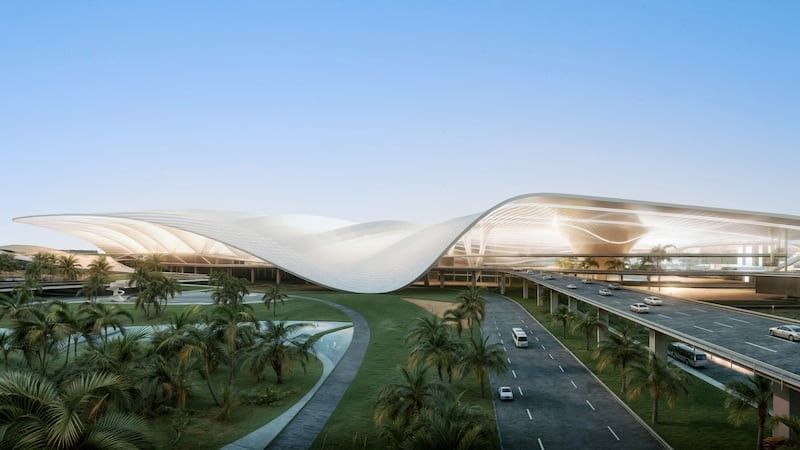
The new Dh128-billion passenger terminal at DWC is being constructed to handle an ultimate capacity of 260 million passengers annually, far surpassing DXB’s capabilities. This move is essential to support Dubai’s long-term growth.
The urgency is clear from current traffic figures. DXB handled 46 million passengers in the first half of 2025 alone, making it the busiest first half in the airport’s history. Passenger numbers are projected to grow, with DXB expected to reach about 100 million passengers monthly within 18 months and around 115 million by 2031. The complete handover to Al Maktoum is targeted for around 2032.
Operational Challenges and the “Experience Premium”
Managing this dual-airport operation presents immense logistical challenges. Coordination between airport management, airline partners, ground handling, security, and passenger services across two active sites requires meticulous planning.
The value of experienced staff cannot be overstated. Employees who understand the intricate systems at DXB are indispensable for training new hires, troubleshooting during the testing phase, and ensuring a smooth transfer of operations without compromising safety or efficiency. Asking them to delay retirement is framed as a necessary trade-off to mitigate risk during this high-stakes period.
The Future of Dubai Aviation
The transition to Al Maktoum International represents the future of Dubai’s aviation sector. The state-of-the-art facility is designed not just to replace DXB but to catapult Dubai’s air travel infrastructure into a new era, supporting the city’s growth for decades to come.
While the full operational move is planned for 2032, the lead-up involves years of construction, system testing, and staff training. During this time, maintaining continuity with a robust and experienced workforce is paramount. The potential delay of retirements, while a significant request of loyal employees, underscores the critical importance of knowledge and experience in executing one of the world’s most ambitious airport transitions.

