



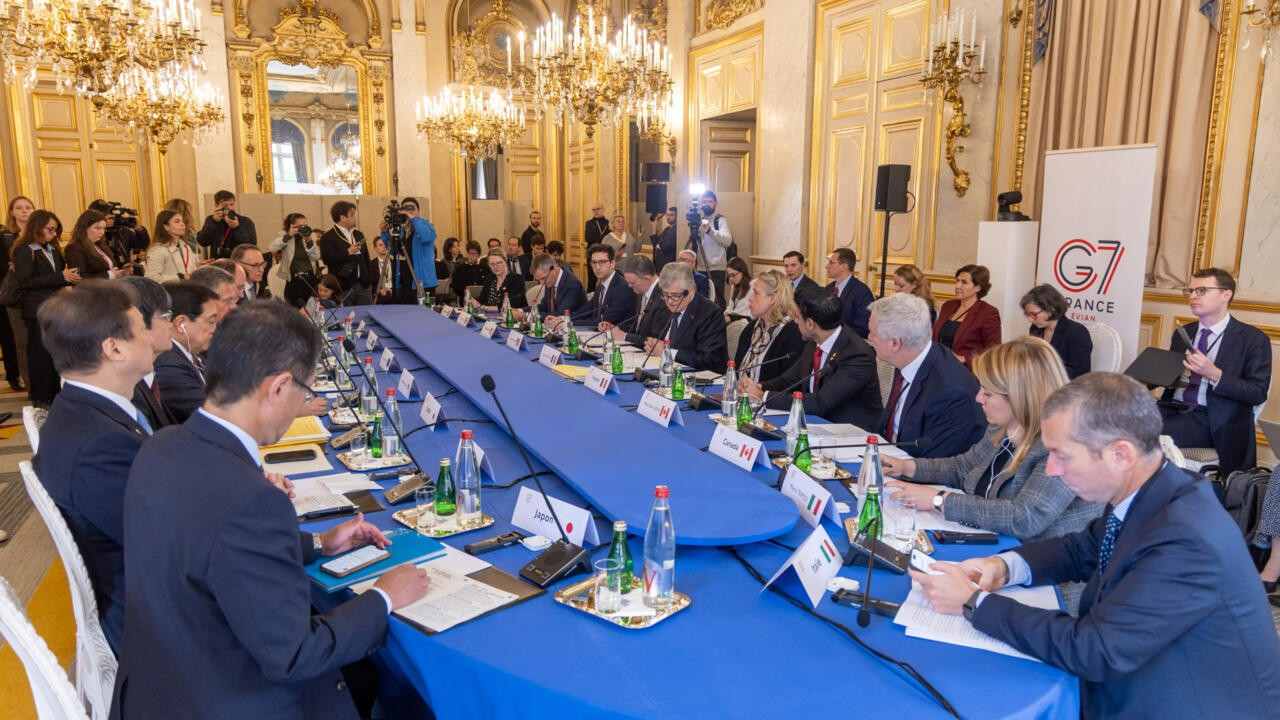
G7 Meeting in Paris Focuses on Iran War, Ukraine and Global Security
Foreign ministers from the Group of Seven (G7) countries are meeting in Paris on November 9 and 10 to discuss growing international tensions, the Iran conflict and efforts to end the Russia-Ukraine war.
The two-day meeting brings together diplomats from the United States, Britain, Canada, France, Germany, Italy and Japan. US Secretary of State Marco Rubio is representing Washington at the discussions.
One of the main priorities is the ongoing conflict involving Iran. European governments are concerned that further US military action could increase regional instability and disrupt international shipping. The Strait of Hormuz is also a major concern because of its importance to global oil and energy supplies.
Speaking before the meeting, Rubio said a breakthrough in negotiations with Iran was not imminent. He defended Washington’s position, describing Iran’s demands as unacceptable.
The Ukraine war is another major issue on the agenda. G7 members are discussing continued military, financial and energy assistance to Kyiv as Russian attacks on Ukrainian energy infrastructure raise concerns ahead of winter.
Abu Dhabi Peace Talks Add Regional Importance to G7 Meeting
The Paris meeting also comes ahead of US-mediated discussions between Ukraine, Russia and the United States, scheduled to take place in Abu Dhabi on November 10 and 11.
European governments want to ensure they have a meaningful role in the peace process. French Foreign Minister Jean-Noël Barrot has indicated that European representatives will participate in the discussions in Abu Dhabi.
The outcome of the negotiations could influence future security arrangements in Europe and the wider region.
Beyond the two conflicts, G7 ministers are expected to discuss maritime security, humanitarian assistance, food supplies and artificial intelligence. France has also invited representatives from Saudi Arabia, Egypt, Brazil, South Korea and Ukraine to participate in selected sessions.
The meeting is taking place under France’s 2026 G7 presidency. It provides an important opportunity for major industrialised economies to coordinate their positions on international security and economic challenges.
For Gulf countries, the discussions are particularly important because developments involving Iran and the Strait of Hormuz could affect regional stability, shipping routes and global energy markets.

