


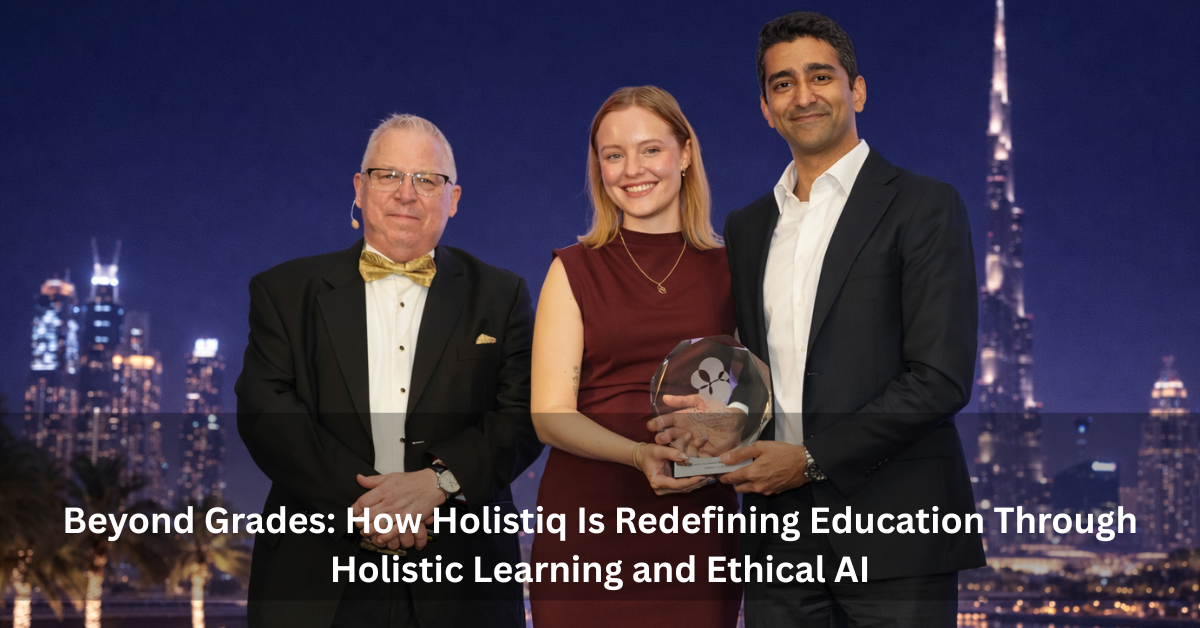
As education systems around the world reassess how success is defined and measured, a growing number of innovators are challenging the traditional, grade centric model of learning. In this exclusive interview with UAE Times, the founder of Holistiq shares insights into their journey, leadership philosophy, and vision for a more holistic, evidence based approach to student development one that values skills, character, and real world readiness alongside academic achievement.
What motivated you to embark on a career in your industry?
My motivation emerged gradually rather than from a single defining moment. While teaching entrepreneurship and working closely with students, I observed that many of the skills shaping their confidence, decision making, and career direction were developed outside formal coursework. Leadership roles, student initiatives, competitions, and community engagement often mattered more than grades. Yet, these experiences were rarely structured or meaningfully recognised. That disconnect between what education claimed to value and what it actually measured stayed with me and ultimately led to the creation of Holistiq.
What does a typical day look like for you?
My days are shaped by three core areas: product clarity, institutional engagement, and long term direction. I spend time with our product and engineering teams translating educational needs into systems that work in real environments, not just on paper. I also engage closely with schools, universities, and partners including foundations working on whole child development to understand evolving expectations. A large part of my day involves listening, aligning perspectives, and ensuring our work remains grounded in educational reality rather than technology trends alone.
How is your industry evolving, and what trends do you foresee?
Education is undergoing a slow but fundamental shift. There is growing recognition that academic achievement alone does not capture student potential. Skills, values, and adaptability are becoming central to how success is defined. At the same time, institutions are under pressure to demonstrate impact through evidence, not just narratives. While AI adoption is accelerating rapidly, the market is also becoming saturated with tools that promise transformation without depth or validation. I foresee a move toward more thoughtful, ethical uses of AI, data informed decision making, and systems that prioritise meaningful and transparent learning outcomes. The real challenge will be ensuring that technology supports human judgment rather than replacing it.
What challenges have you overcome, and how?
One of the biggest challenges has been building trust in a sector that values stability and credibility. Introducing a new way of measuring student development required patience, strong research foundations, and close collaboration with institutions. Many schools and universities were initially cautious, which meant we had to focus on proving value through real world deployments rather than promises. Over time, working closely with institutions across ten different countries, refining our approach based on feedback, and demonstrating consistent outcomes helped build confidence. This journey of validation was reinforced by external recognition, including receiving the GESS Award for Best Digital Educational Resource/Product, which signalled that both the problem we were addressing and the solution we built resonated beyond our immediate network.
Can you share any pivotal career moments?
A pivotal moment was realising that co curricular learning represented a missing data layer in education. Once that became clear, the challenge shifted from improving individual programmes to building infrastructure that could make this learning visible and credible at scale. That insight gave my work a much clearer sense of purpose.
How do you define your leadership style?
I see leadership as creating clarity in complex environments. My approach is calm and deliberate, focused on listening, setting direction, and trusting people to do their best work. I value long term thinking, collaboration, and building systems that outlast individual decisions.
Is your organisation leveraging AI or other emerging technologies?
Yes, but very intentionally. We use AI to support analysis and consistency, particularly in mapping learning experiences to skill frameworks. At the core of our work is a co curricular management system that schools and universities use to plan, manage, and track activities in a structured way, which then enables meaningful analysis and reporting. Importantly, AI supports human expertise rather than replacing it. Transparency, ethics, and trust are central to how we design our systems, especially when working with young people and educational institutions.
What are your long term goals for your career or business?
My long term goal is to help education systems truly value holistic development. I want students to leave institutions with credible evidence of who they have become, not just what they have scored. Through partnerships with schools, universities, and organisations such as the Abdulla Al Ghurair Foundation which is advancing whole child development across the UAE we are working to build the infrastructure that supports this shift at scale. Creating that foundation responsibly and thoughtfully is what continues to motivate me.
As education moves beyond traditional metrics, leaders like the founder of Holistiq are helping institutions bridge the gap between learning and real world readiness. By combining ethical technology, research driven frameworks, and a deep understanding of student development, their work reflects a broader transformation underway in global education one that prioritises purpose, adaptability, and lifelong growth.

