


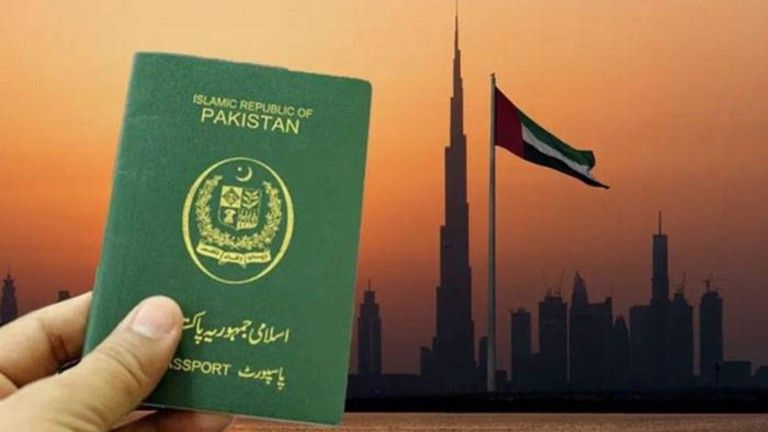
UAE Visa Freeze for Pakistani Passport Holders: Causes, Impact, and Official Denials
A significant and impactful change has occurred in the travel dynamics between the United Arab Emirates (UAE) and Pakistan, with the Gulf nation effectively implementing a near-total freeze on new visas for Pakistani citizens holding ordinary (green) passports. While UAE officials publicly deny an official “ban,” evidence from travel agents and Pakistani government sources points to a de facto suspension, creating uncertainty and disruption for thousands.
This unofficial freeze primarily affects first-time applicants and those seeking single-entry tourist, visitor, or work visas, with rejection rates reportedly as high as 80%. The restrictions appear to target only ordinary passports; holders of diplomatic or special blue passports, along with individuals who already possess valid UAE visas, remain unaffected.
Root Causes: Security and Visa Misuse Concerns
The visa freeze is not an isolated decision but a response to growing concerns within UAE authorities. Reports indicate that the move stems from repeated incidents involving some Pakistani nationals, including:
Engagement in criminal activities.
Overstaying their visas beyond the permitted duration.
Systemic misuse of visa privileges, such as arriving on a tourist visa to seek unauthorized work.
These issues have prompted the UAE to tighten its entry gates significantly, using heightened scrutiny as a filtering mechanism.
Three Major Consequences of the UAE Visa Freeze
The implications of this de facto ban are far-reaching for both individuals and the Pakistani state.
1. A Major Blow to Labour Migration and Remittances
The UAE has long been a primary destination for Pakistani workers and entrepreneurs. The blocking of new visas strands thousands of jobseekers, cancels travel plans, and forces travel agencies to issue refunds. This has a dual economic impact: it hurts individual families reliant on Gulf incomes and threatens a key source of foreign exchange for Pakistan’s struggling economy. Remittances from overseas Pakistanis are a financial lifeline, and a prolonged freeze could severely strain national economic stability.
2. Further Weakening of the Pakistani Passport
The Pakistani passport already ranks among the world’s weakest in terms of global mobility. This wave of rejections further tarnishes its international credibility. If the freeze becomes a long-term policy, it could trigger a domino effect, making it harder for ordinary Pakistani passport holders to obtain visas from other countries and stalling future visa liberalization talks.
3. Diplomatic Strain and a Push for Domestic Reforms
The situation has introduced tension into UAE-Pakistan relations. The contradiction between official UAE denials and the on-the-ground reality has created frustration and awkwardness. Within Pakistani official circles, there is a growing recognition that without serious domestic reforms—such as rigorous background checks, a crackdown on overseas criminal networks, and preventing visa overstays—such restrictions could become permanent or even spread to other Gulf Cooperation Council (GCC) countries.
Official Stance vs. On-the-Ground Reality
The public position of the UAE government, as stated by Consul General Bakheet Ateeq Alremeithi in Karachi, is that there is no ban and “every type of visa is being processed.” Officials attribute the high rejection rate to a large volume of applications.
However, this contrasts sharply with the experiences documented by travel agencies, visa applicants, and even Pakistan’s own Interior Ministry, all of whom describe a landscape where approvals for ordinary passport holders have virtually stopped.
What Happens Next?
The path forward remains uncertain. Diplomatic channels are engaged in “quiet talks,” but there is no timeline for a resolution. For Pakistan, this situation serves as a stark warning to reduce its economic dependence on remittances and implement stronger internal controls to restore international trust.
For now, the unofficial freeze remains in effect, leaving a cloud of uncertainty over thousands of prospective travelers and highlighting the precarious nature of visa-based mobility for Pakistani citizens.

