


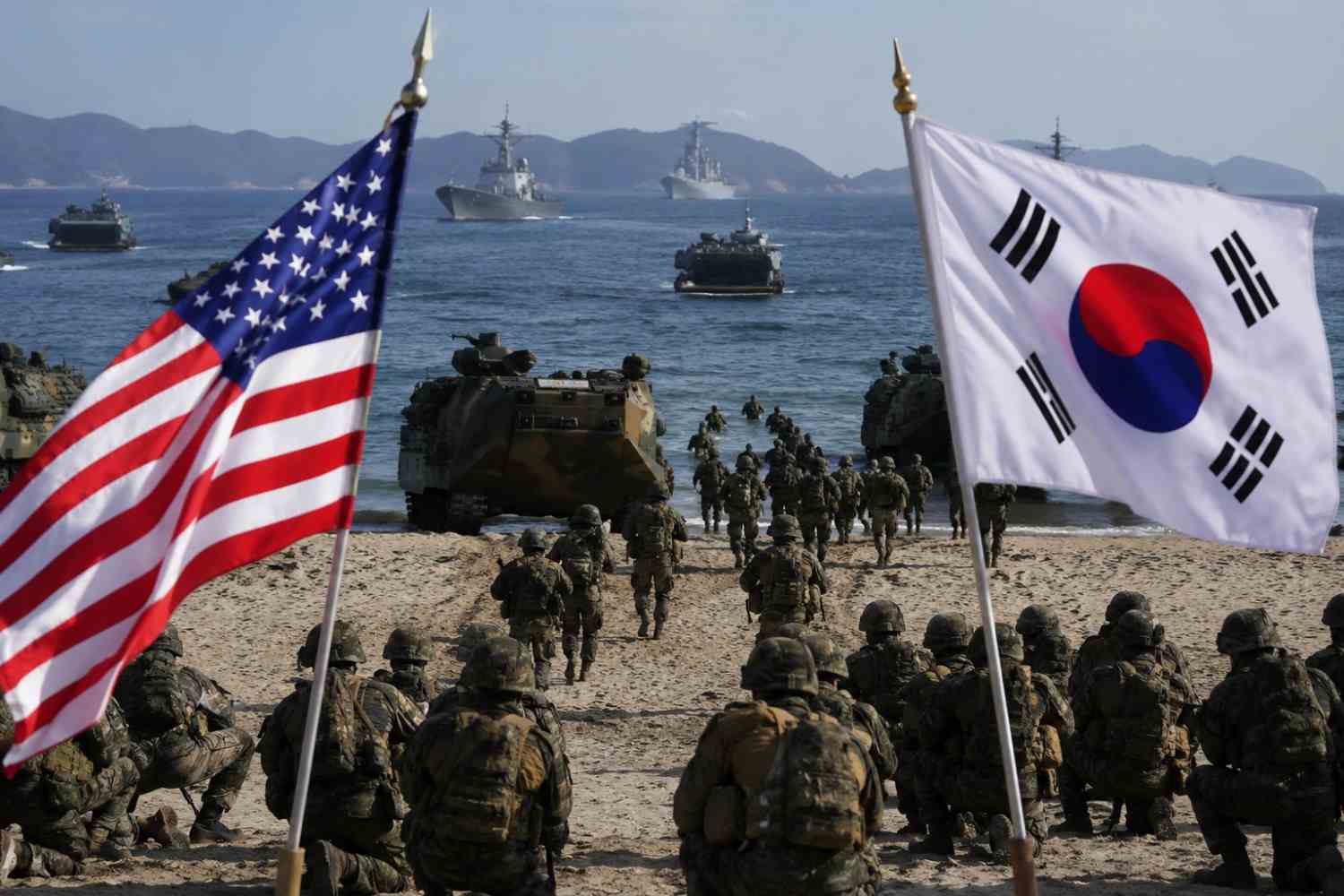
US South Korea Military Drills Scaled Back as Trump Orders Changes
The US South Korea military drills are being scaled back after US President Donald Trump ordered the Pentagon to substantially reduce joint exercises with Seoul.
Trump announced the decision on August 16, shortly before the annual Ulchi Freedom Shield exercise began. He said the drills were costly and sent an inappropriate signal to North Korea. He also pointed to his relationship with North Korean leader Kim Jong Un.
The exercises still began on August 17 as planned. The annual drills are scheduled to continue through August 27 and involve about 18,000 South Korean troops. They are designed to strengthen the allies’ ability to respond to a potential North Korean attack.
This year’s training also focuses on modern threats, including drones, cyberattacks and GPS disruption. Trump has also expressed frustration over South Korea’s decision not to join US efforts related to the denuclearisation of Iran.
Why Are the US South Korea Military Drills Important?
The exercises are a major part of military coordination between Washington and Seoul. They allow both countries to practise defensive operations and improve their ability to respond quickly during a crisis.
North Korea has repeatedly criticised the drills, describing them as preparation for an invasion. Pyongyang has also continued developing its missile and nuclear programmes.
South Korea remains committed to its defence relationship with the United States. Officials in Seoul have also suggested that changes to the exercises could create an opportunity for renewed dialogue with North Korea.
The decision to reduce the scale of US participation could therefore have wider consequences for security on the Korean Peninsula. While the drills have not been cancelled, the change has raised questions about military readiness and the future direction of the US-South Korea alliance.

