


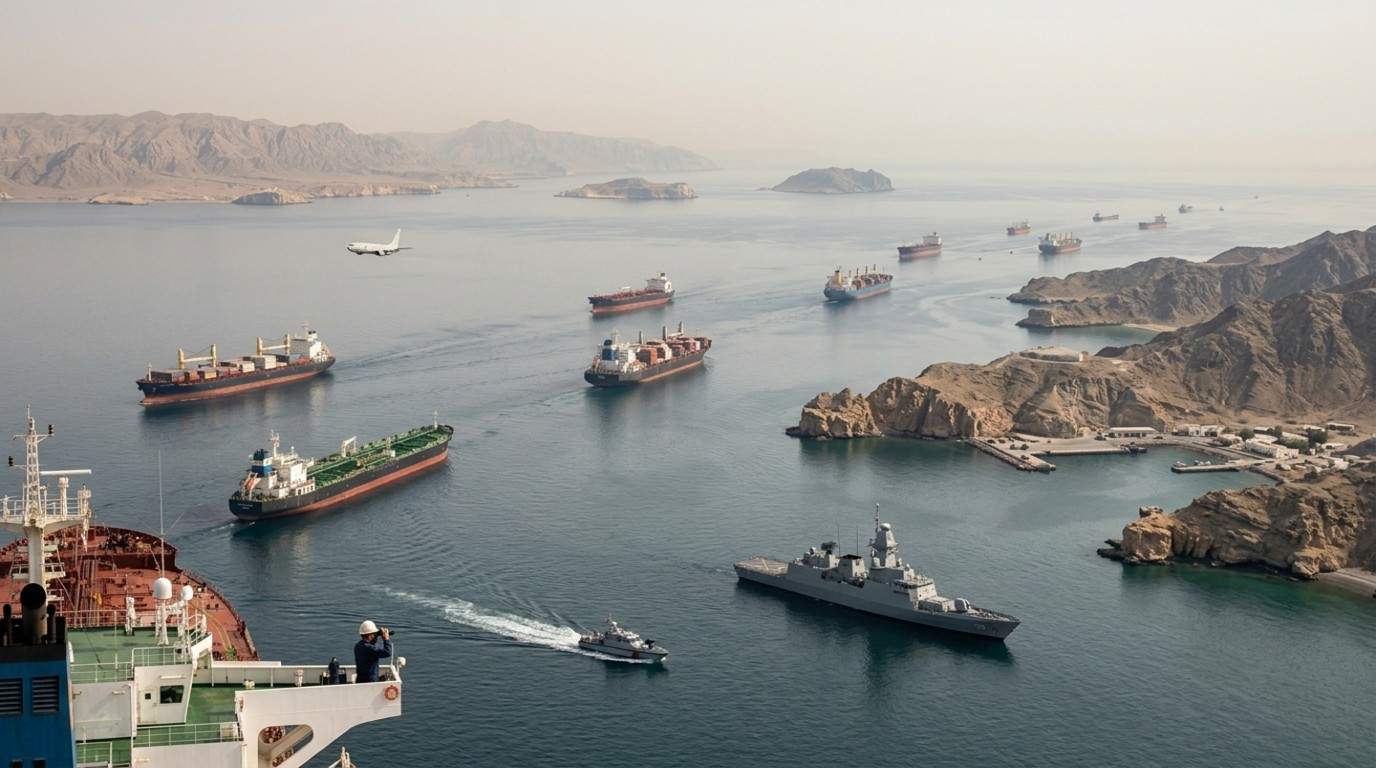
Strait of Hormuz Crisis Deepens as US-Iran Tensions Threaten Oil Supplies
The Strait of Hormuz crisis is becoming a growing concern for global energy markets as the United States and Iran remain locked in a tense standoff.
Shipping through the key waterway has slowed sharply. Reuters reported that only six commodity vessels passed through the strait on August 18, compared with a recent average of about 11 vessels a day. The drop reflects growing concerns among shipping companies about safety in the region.
The situation is also complicated by conflicting claims from Washington and Tehran. US President Donald Trump has said the Strait of Hormuz is open, while Iran maintains that the waterway remains closed to shipping.
The uncertainty is already being felt in oil markets. Brent crude settled at $91.62 per barrel on August 19, while US West Texas Intermediate reached $85.83. Both prices were at their highest closing levels since July 24.
Why the Strait of Hormuz Matters?
The Strait of Hormuz is one of the world’s most important energy routes. A large share of global oil and liquefied natural gas shipments normally passes through the narrow waterway.
When shipping slows, oil buyers and traders begin to worry about whether enough supplies will reach international markets. That can push prices higher even before a major physical shortage develops.
The crisis is also affecting shipping decisions. Major Chinese shipping companies have stopped operating through Hormuz and the Bab al-Mandab route, while other vessels are taking longer or more cautious routes.
The International Energy Agency has already warned of a significant impact on global oil supplies. Its latest assessment projects that global oil supply could fall by about 4.3 million barrels per day in 2026, or roughly 4%, because of the continuing disruption.
For consumers, a prolonged crisis could mean higher fuel and transportation costs. Airlines, shipping companies and industries that rely heavily on energy could also face higher operating expenses.
For now, the biggest question is whether Washington and Tehran can find a way back to negotiations. With shipping still restricted and oil prices rising, the longer the standoff continues, the greater the risk of wider economic pressure.

