



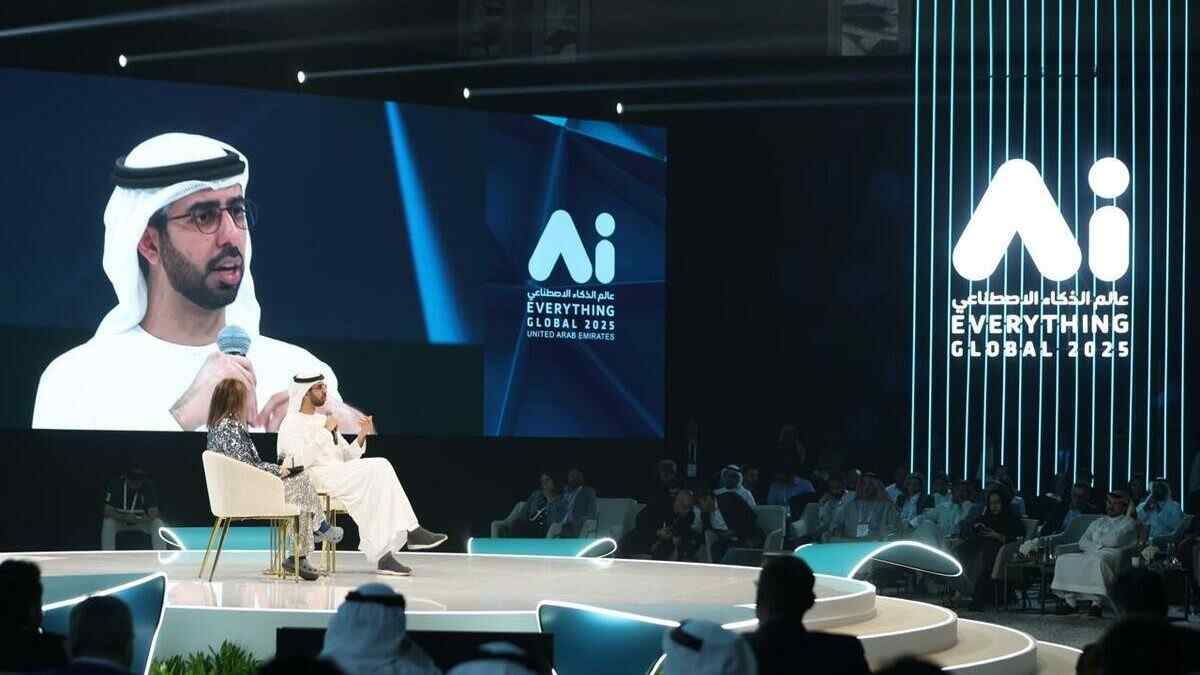
Abu Dhabi AI Summit Warns of Geopolitical Shifts, Highlights UAE’s Leadership Role
The recent Abu Dhabi Global AI Summit served as a critical platform for world leaders and tech executives to dissect how artificial intelligence is reshaping global power structures. A central theme emerged: AI is no longer just a technological tool but a core determinant of geopolitical influence, with a stark digital divide threatening to leave billions behind.
The discussions painted a picture of a world where supremacy is defined by computing power, data control, and the ability to govern AI responsibly.
AI as a Geopolitical Force
Experts at the summit framed AI as a fundamental shift in international relations. Ian Bremmer, President of the Eurasia Group, starkly noted that “AI is geopolitical by design.” He warned that a new divide is opening between nations that possess the infrastructure, talent, and computational resources to harness AI and those that do not, potentially cementing existing global inequalities.
The Stark Reality of the Global Digital Divide
The scale of exclusion from the AI revolution was a key focus. Brad Smith, Vice Chair and President of Microsoft, highlighted a critical barrier: infrastructure. He pointed out that nearly 700 million people lack electricity, and when combined with deficits in internet access and digital skills, approximately 3.9 billion people are effectively locked out of benefiting from advanced AI.
This underscores that democratizing AI is less about building open-source models and more about solving foundational issues of connectivity and education.
The UAE’s Strategic Position as an AI Hub
Amid these global challenges, the UAE was highlighted as a success story. Microsoft data presented at the summit revealed the UAE has an impressive AI adoption rate of 59% per capita, surpassing many Western nations. Through early investment, strategic infrastructure projects, and a focus on workforce upskilling, the UAE has cemented its role as a leading global AI hub, bridging innovation between East and West.
Rethinking Governance for the AI Era
A consensus at the summit was that current global governance frameworks are ill-equipped to handle AI’s pace and impact. Bremmer proposed the creation of new, forward-looking institutions, suggesting the need for “ministries for the future” dedicated to long-term technological stewardship rather than short-term political cycles.
This sentiment was echoed by others who argued that effective AI policy must be anticipatory, not just reactive.
The Overlooked Bottleneck: Energy
A critical insight from the summit was that the future of AI is intrinsically linked to energy. Peng Xiao, CEO of G42, stated that “the cost of intelligence will become the cost of energy.” This positions nations with abundant, affordable, and sustainable energy sources—such as solar and nuclear power—at a significant strategic advantage in the AI race, transforming it from a purely digital competition into an energy and infrastructure one.
Also Read: Stop Hair Fall Naturally: Expert-Backed Oils and Proven Tips for Stronger, Healthier Hair
Key Takeaways and Global Implications
The summit concluded with several critical implications for the future:
Power Imbalance: A concentration of AI power in a few corporations and nations risks creating a new form of technological colonialism.
Innovation-Friendly Policy: Kenya’s Presidential Adviser on Digital Transformation, Philip Thigo, cautioned that premature regulation could stifle innovation in developing regions, suggesting policy should follow and nurture innovation.
The Need for Global Cooperation: The challenge is too vast for any single nation. The summit called for a “coalition of the willing” to ensure AI development remains aligned with human interests and avoids becoming a zero-sum geopolitical game.
Conclusion: A Crossroads for Humanity
The Abu Dhabi Global AI Summit made it clear that the world stands at a crossroads. AI has the potential to either deepen global inequalities or propel humanity forward in an unprecedented era of progress. The path taken will depend on a collective commitment to building inclusive infrastructure, crafting agile governance, and fostering international cooperation. For nations like the UAE, the summit solidified their position not just as participants, but as crucial architects of our AI-driven future.

