



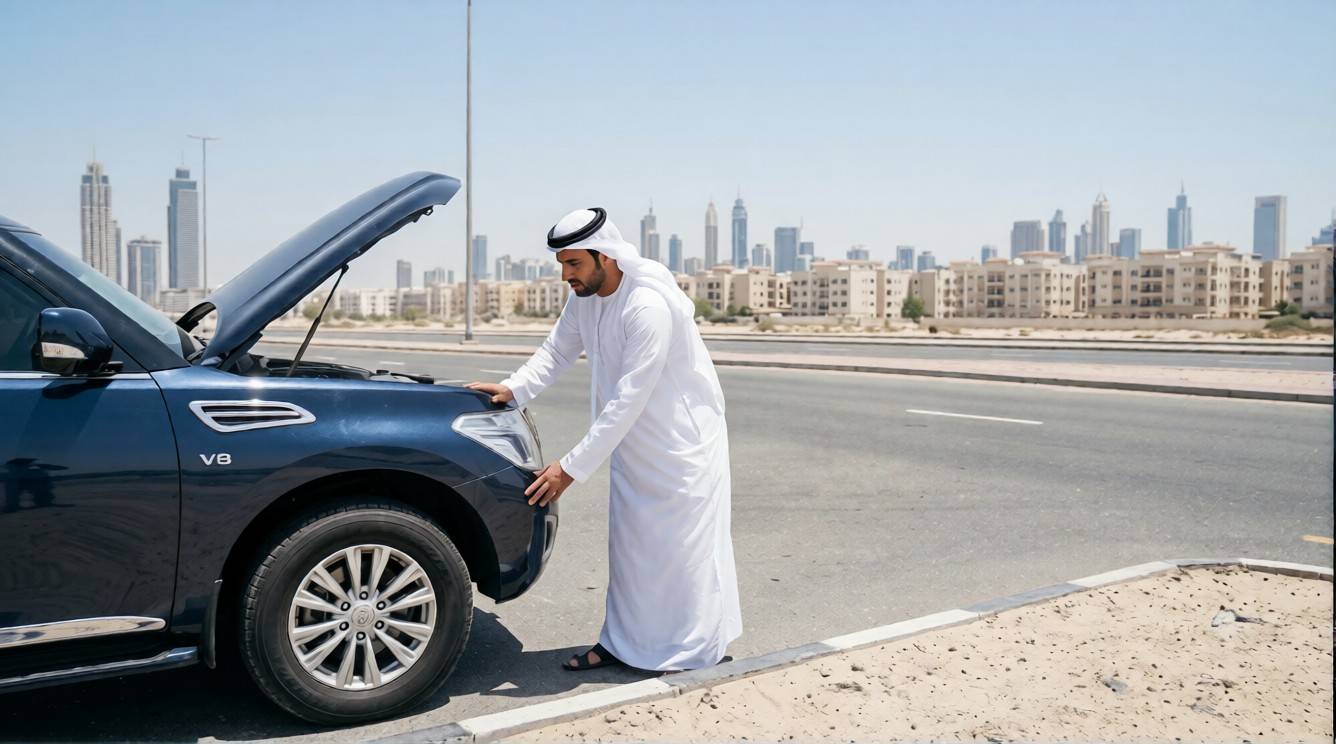
How UAE Heat Affects Your Car: 7 Things Drivers Should Check
UAE summer heat can be tough on cars. Extreme temperatures can affect tyres, batteries, engine fluids, air conditioning and even the car’s paint and interior. Regular checks can help drivers avoid unexpected breakdowns and expensive repairs.
With temperatures regularly climbing into the 40s during the hottest months, vehicles parked outdoors face prolonged exposure to heat. The combination of high temperatures, strong sunlight and dusty conditions can place additional stress on several important parts of a car.
Here are seven things UAE drivers should check regularly.
7 Car Parts UAE Drivers Should Check in Extreme Heat
1. Check Your Tyre Pressure
Hot weather can affect tyre pressure, while driving on extremely hot roads puts additional stress on tyres. Drivers should check tyre pressure regularly and follow the pressure recommended by the vehicle manufacturer. Look for:
- Uneven tread wear
- Cracks or visible damage
- Bulges on the sidewall
- Unusual loss of pressure
- Tyres that are significantly older than recommended
Always check tyre pressure when the tyres are cold for a more accurate reading.
2. Inspect the Car Battery
High temperatures can shorten the life of a car battery and accelerate fluid loss in conventional batteries. A weak battery may struggle to start the vehicle, particularly after the car has been sitting in the heat for several hours. Drivers should watch for:
- Slow engine cranking
- Difficulty starting the car
- Corrosion around battery terminals
- Warning lights on the dashboard
- A battery that is approaching the end of its expected service life
Getting the battery tested before the hottest period can help prevent an unexpected breakdown.
3. Check Engine Coolant
The cooling system works harder when temperatures are high. Low coolant levels or a problem with the cooling system can increase the risk of overheating.
Drivers should check the coolant level when the engine is completely cool and look for signs of leaks. Never remove a hot radiator cap. The cooling system can remain under pressure and cause serious burns.
4. Don’t Ignore the Air Conditioner
A properly working AC is essential for comfortable driving in the UAE. If the AC is taking longer than usual to cool the cabin, blowing weak air or producing unusual smells, it may need inspection.
Drivers should also keep the cabin air filter clean because a clogged filter can restrict airflow and reduce AC performance.
5. Protect the Car’s Interior
Continuous exposure to strong sunlight can damage dashboards, seats and other interior surfaces over time. Simple steps can help reduce the damage:
- Use a windshield sunshade.
- Park in covered or shaded areas when possible.
- Use suitable protective covers for the interior.
- Avoid leaving sensitive items inside the vehicle.
- Keep leather and other interior materials properly maintained.
6. Check Engine Oil and Other Fluids
Engine oil plays an important role in keeping moving components lubricated and reducing friction. Drivers should check the oil level according to the vehicle manufacturer’s instructions and follow the recommended service schedule.
Other fluids, including brake fluid and windshield washer fluid, should also be checked regularly. If you notice an unusual fluid leak under the car, get the vehicle inspected rather than ignoring it.
7. Inspect Belts, Hoses and Wipers
Heat can contribute to the deterioration of rubber components. Drivers should inspect belts and hoses for visible cracks, damage or signs of wear.
Windscreen wipers can also become hard or brittle after prolonged exposure to sunlight. Replacing worn components before they fail can help prevent bigger problems while driving.
How UAE Drivers Can Protect Their Cars?
There is no way to completely avoid the effects of extreme heat, but good maintenance can reduce the risks. A few simple habits can make a difference:
- Park in a covered area whenever possible.
- Check tyre pressure regularly.
- Keep the cooling system properly maintained.
- Service the AC before peak summer.
- Follow the manufacturer’s maintenance schedule.
- Avoid ignoring dashboard warning lights.
- Keep emergency supplies and drinking water in the car when appropriate.
- Have unusual noises, smells or warning signs checked promptly.
For UAE drivers, heat-related vehicle problems are often preventable with basic maintenance. A few minutes spent checking tyres, fluids, the battery and cooling system can help reduce the risk of being stranded on the road.
As temperatures rise, keeping a car properly maintained is not just about comfort. It can also help protect the vehicle’s performance, safety and long-term value.

