



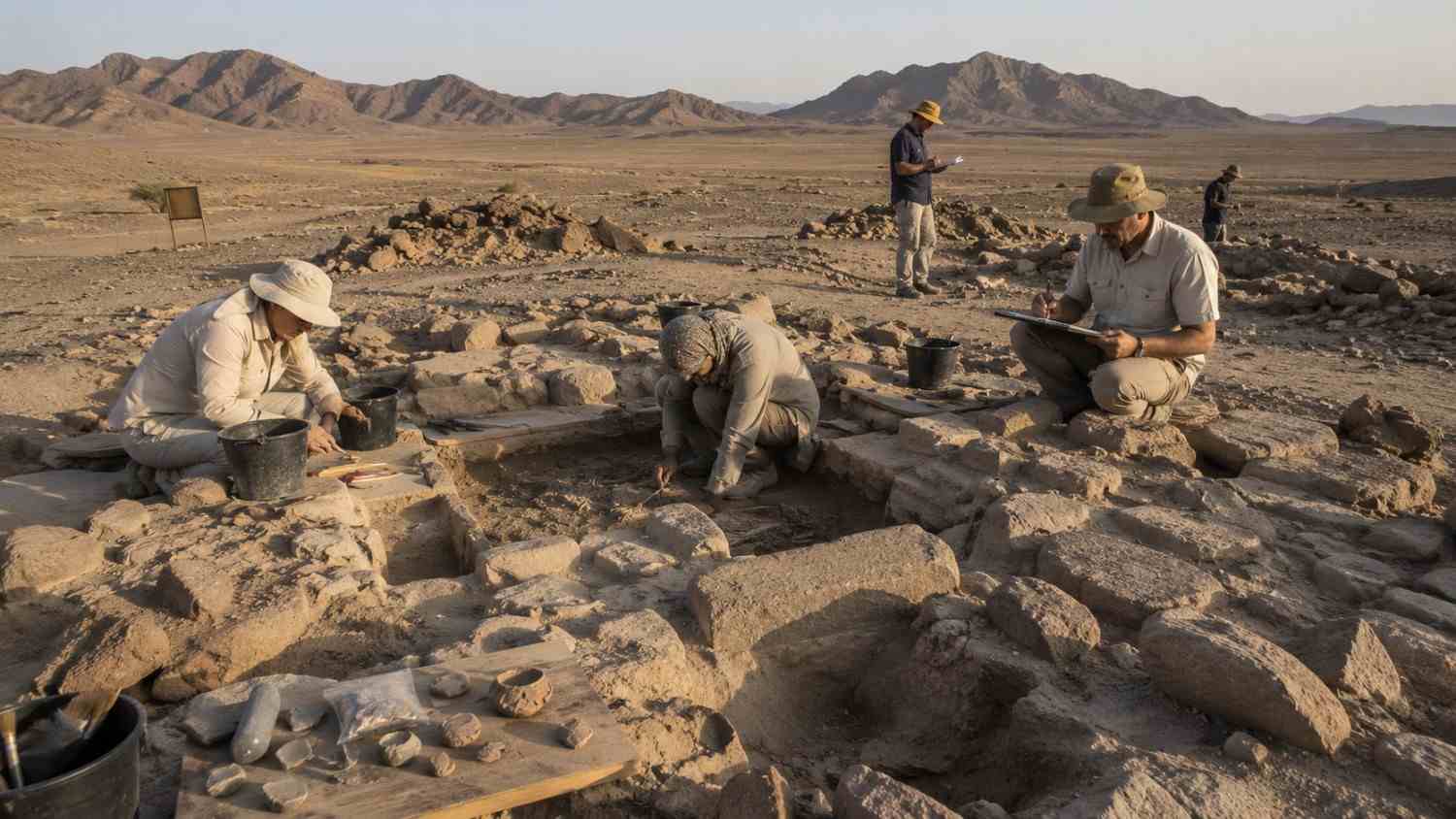
UAE Archaeological Discoveries Shed New Light on Ancient Human Life
The UAE has uncovered new evidence that is helping researchers understand more than 60,000 years of human history across the country.
A new report published on August 23, 2026, brings together major archaeological findings from Sharjah and Abu Dhabi, covering prehistoric settlements, ancient tombs and historic cultural sites.
One of the most significant findings comes from Jebel Al Buhais in Sharjah. Research at the Buhais Rockshelter identified repeated periods of human occupation, including evidence dating to around 59,000, 35,000 and 16,000 years ago.
The research challenges the earlier assumption that southeastern Arabia was largely uninhabited during parts of this period.
Researchers also found that periods of human occupation corresponded with increased rainfall and water availability. This suggests early communities were able to adapt to changing environmental conditions and return to the region when conditions became more favourable.
In Abu Dhabi, archaeologists uncovered a major Wadi Suq and Late Bronze Age tomb at the Qattara Archaeological Cemetery in Al Ain.
The collective tomb dates to approximately 2000–1300 BCE and contains pottery, weapons and personal ornaments. Researchers are now carrying out DNA and isotope analysis to learn more about ancient diets, migration and trade connections.
The UAE has also expanded international recognition of its heritage, with five Emirati sites added to the ICESCO Heritage List in 2026.
Together, these UAE archaeological discoveries are giving researchers a deeper understanding of how ancient communities lived, moved and adapted across the Emirates. They also highlight the country’s growing focus on excavation, scientific research and preservation of its archaeological heritage.

