



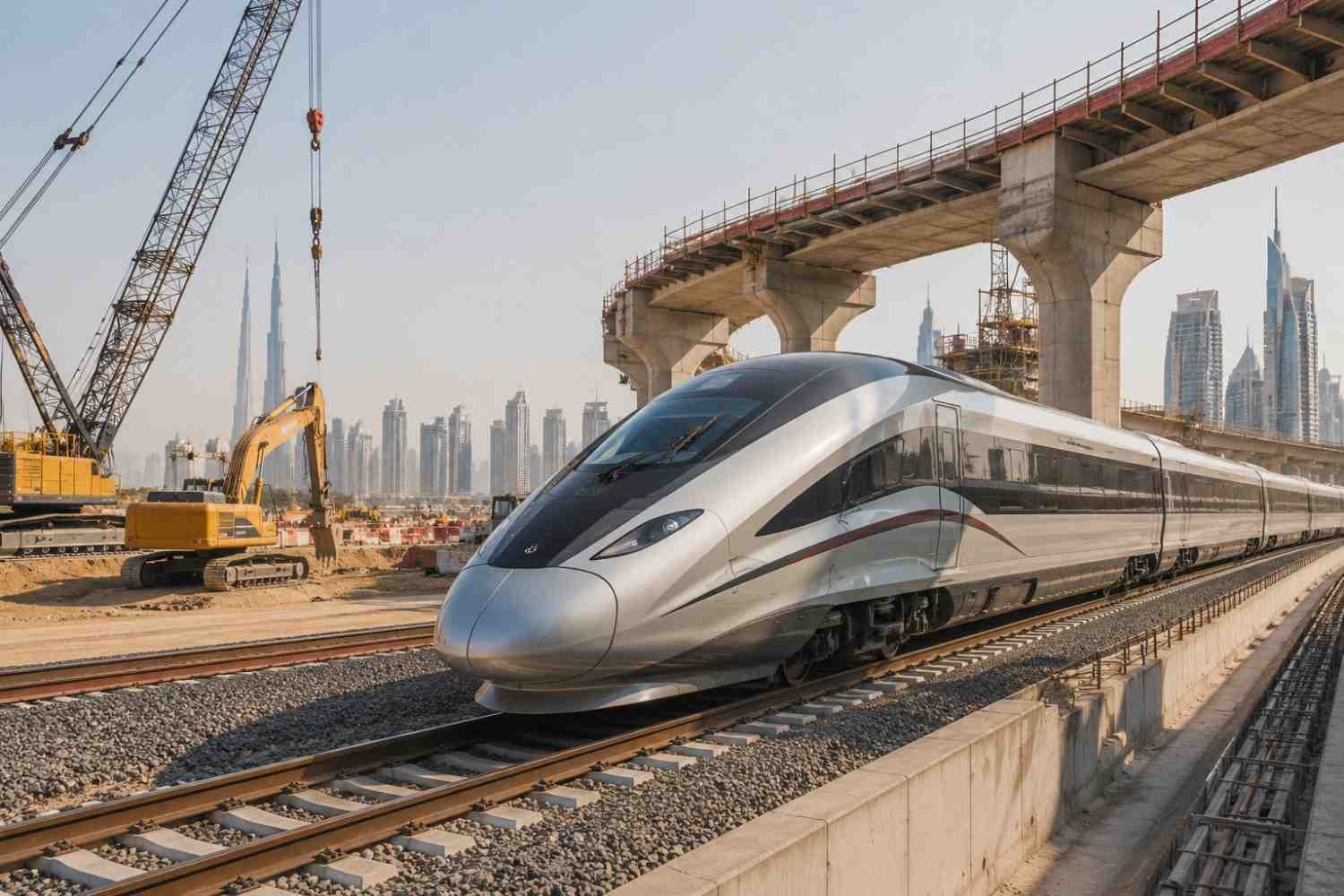
Abu Dhabi-Dubai High-Speed Rail Moves Into Construction Phase, Journey to Take Just 30 Minutes
The UAE is moving ahead with one of its biggest transport projects as the Abu Dhabi-Dubai High-Speed Rail enters a major construction phase.
Etihad Rail has awarded multibillion-dollar design-and-build contracts for the first phase of the dedicated high-speed railway. The project will create a new rail connection between the UAE’s two largest cities and is expected to transform how people travel between Abu Dhabi and Dubai.
The first phase will cover around 150 kilometres and is targeted for completion by 2030. The railway is designed for trains capable of reaching speeds of up to 350 km/h, while planned operating speeds are expected to reach around 320 km/h.
Once operational, the high-speed service is expected to cut the journey between Abu Dhabi and Dubai to just 30 minutes.
What We Know About the Abu Dhabi-Dubai High-Speed Rail
The project will be separate from the regular Etihad Rail passenger service planned to launch in 2026. Some of the key details include:
- Route length: Around 150 km for the first phase.
- Maximum design speed: Up to 350 km/h.
- Expected travel time: Around 30 minutes between Abu Dhabi and Dubai.
- Target opening: 2030.
- Type: Dedicated electric high-speed passenger railway.
- Investment: More than $8 billion has been reported for the first phase.
- Stations: The planned route will serve major destinations across Abu Dhabi and Dubai.
The project is being developed as a dedicated high-speed line rather than an upgrade to the existing national passenger railway.
Where Will the High-Speed Train Stop?
The planned route is designed to connect important residential, tourism and transport areas.
The announced stations include locations around Reem Island, Saadiyat Island, Yas Island and Zayed International Airport in Abu Dhabi, with stations around Al Maktoum International Airport and Al Jaddaf in Dubai.
This station strategy could make the railway useful for more than daily commuters. Tourists could use the service to move between major attractions, airports and business districts without relying entirely on road transport.
Who Is Building the Railway?
Etihad Rail has divided the civil works and station packages into major sections for Abu Dhabi and Dubai.
The Abu Dhabi side was awarded to a consortium led by National Projects Construction (NPC), with Trojan Tunnelling, Türkiye’s Kalyon and China State Construction Engineering Corporation involved in the consortium.
The Dubai section was awarded to a consortium led by Larsen & Toubro, together with China Harbour Engineering Company and Wade Adams. Engineering and design companies including Jacobs, Egis and Surbana Jurong are also involved in the project.
How Is This Different From Etihad Rail’s Existing Passenger Service?
Etihad Rail‘s national passenger service has already started operations in the UAE. The first scheduled passenger service began on June 30, 2026, connecting Fujairah with Mohammed Bin Zayed City in Abu Dhabi.
The existing passenger service is part of the UAE’s national railway network and connects several emirates. The trains can travel at speeds of up to around 200 km/h.
The Abu Dhabi-Dubai High-Speed Rail is a separate project. It will operate on a dedicated, fully electrified high-speed line, with trains designed to reach speeds of up to 350 km/h. The planned service aims to reduce travel time between Abu Dhabi and Dubai to around 30 minutes.
This distinction is important because the existing Etihad Rail passenger network and the new high-speed railway are two separate services. The national passenger service is already operating, while the dedicated Abu Dhabi-Dubai high-speed line is still under development.
What Could the New Rail Line Mean for UAE Residents?
The high-speed railway could provide a major alternative to driving between the two emirates.
For regular commuters, a 30-minute journey could make it easier to live in one emirate and work in the other. It could also reduce pressure on major highways by giving travellers another option for intercity journeys.
The project could have wider economic benefits too. Faster connections between Abu Dhabi and Dubai may support tourism, business travel, investment and development around the new stations.
For the UAE, the railway represents another step towards building a faster and more connected public transport system.
With the first phase targeted for 2030, residents still have several years to wait. But the awarding of the major construction contracts marks a significant step forward for the UAE’s ambitious high-speed rail plans.

