



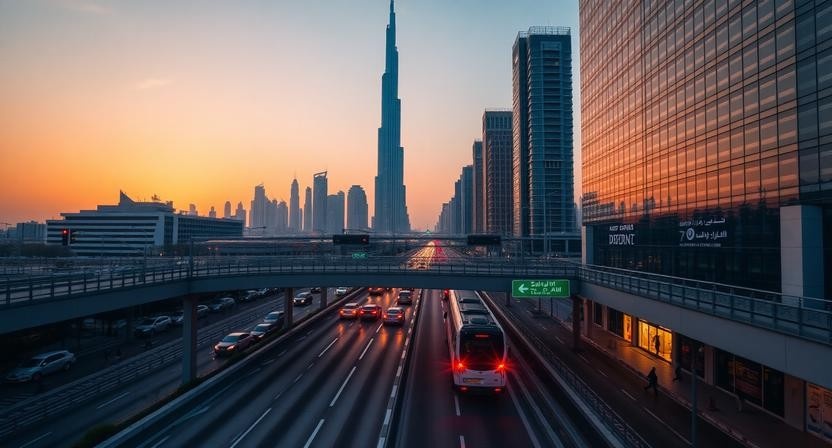
Dubai Smart City: How Data and AI Are Transforming Urban Life
Dubai is taking its smart-city ambitions to a new level, using artificial intelligence, data and digital technology to make government services and urban planning faster and more efficient. The emirate has already earned a major global ranking for its technology-driven approach.
Dubai ranked second globally in Boston Consulting Group’s first 2026 Intelligent Cities Index, behind London. New York City, Washington, DC and Amsterdam followed.
The index assessed 61 major cities across 39 countries and examined how effectively they use technology to improve life for residents and businesses. Dubai also ranked first globally for technology adoption, making it one of the strongest cities in the world when it comes to putting new technology into practical use.
Dubai’s Smart City Strategy Is Moving Beyond Apps
The idea behind a Dubai smart city is no longer simply putting government services online. Dubai is working to connect different systems so that data can move between government departments and services can become easier for residents to access.
In April 2026, Dubai announced plans to integrate individual and business government services into a unified digital ecosystem within one year. The initiative aims to reduce fragmentation between government platforms and create a smoother digital experience.
Dubai already has services such as DubaiNow and UAE Pass, along with smart police stations, smart metro stations and digital utility services.
Artificial intelligence is becoming another important part of this system. Dubai is developing AI-powered services that can understand requests, provide information and help users complete government transactions.
The long-term goal is to move from residents searching for individual services to digital systems that can better understand what they need.
Dubai Digital Twin Could Change Urban Planning
One of the most notable recent developments is the launch of the Dubai Digital Twin Platform in July 2026. A digital twin creates a digital representation of physical assets and urban infrastructure, allowing authorities to study different scenarios using data.
For a rapidly growing city such as Dubai, this could be particularly useful. Planners can use digital information about buildings, roads and infrastructure to understand how proposed changes may affect different areas before projects are implemented.
The technology could eventually support decisions involving transportation, infrastructure, public spaces and urban development. Instead of relying only on traditional planning methods, authorities can combine real-world information with digital models to make decisions more efficiently.

AI Is Becoming Part of Everyday Government
Dubai’s smart-city plans also connect with the UAE’s broader push towards artificial intelligence. In April, the UAE announced a framework aimed at transforming 50% of federal government sectors and services within two years through Agentic AI.
These systems are designed to perform tasks and support decisions with greater autonomy than conventional AI tools.
Dubai is also encouraging the private sector to adopt Agentic AI. This shows that the emirate sees AI as more than a government technology. It is becoming part of a wider economic and digital transformation.
The use of AI is also reaching unexpected areas. Dubai Municipality has launched an AI-powered challenge for the redesign of Al Safa 2 Park. The technology can support site analysis, scenario testing, design optimisation and visualisation, while human decision-making remains part of the process.
What Dubai’s No. 2 Ranking Means
Dubai’s second-place position in the BCG Intelligent Cities Index is significant because the ranking looks beyond the number of smart devices or digital services a city has. It considers outcomes, strategy, adoption, ways of working and supporting infrastructure.
The emirate ranked first globally for technology adoption, showing that its focus is not only on developing new technology but also on putting it into practical use. For residents and businesses, the benefits of Dubai’s smart-city approach could include:
- Faster government services: More services can be completed digitally without visiting government offices.
- Better traffic management: Data and connected systems can help authorities understand traffic patterns and manage roads more efficiently.
- Smarter urban planning: Digital models can help planners test infrastructure changes before implementing them.
- More personalised services: AI can help digital platforms understand requests and guide users towards the right services.
- Improved infrastructure: Real-time data can help authorities monitor and maintain roads, buildings and other urban systems.
- Greater efficiency for businesses: Connected government platforms can reduce the time businesses spend dealing with separate services and procedures.
This is what makes the Dubai smart city strategy different from simply having advanced technology. The focus is increasingly on using data and AI to solve real urban problems and make everyday services easier.
With Dubai ranked second globally in BCG’s 2026 Intelligent Cities Index, the next challenge will be turning its technology leadership into measurable improvements in daily life.

